The first SEED_2065 show at the Handbag Factory Gallery, London, in December 2025, imagined a hopeful future, rooted in harmony between humans and the more-than-human world. Images of Artworks, made specifically for the show, are below.
Beneath the images, are the wall texts (often including fictional detail) written by the artists and displayed alongside artworks in the show.
Susan Askew
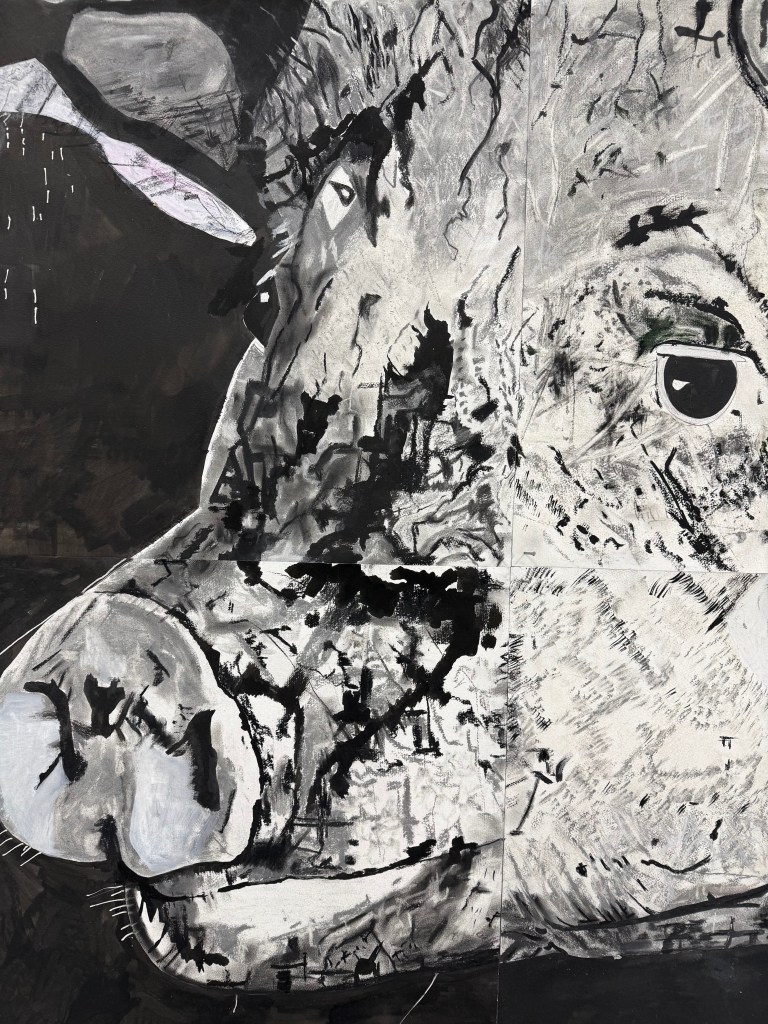
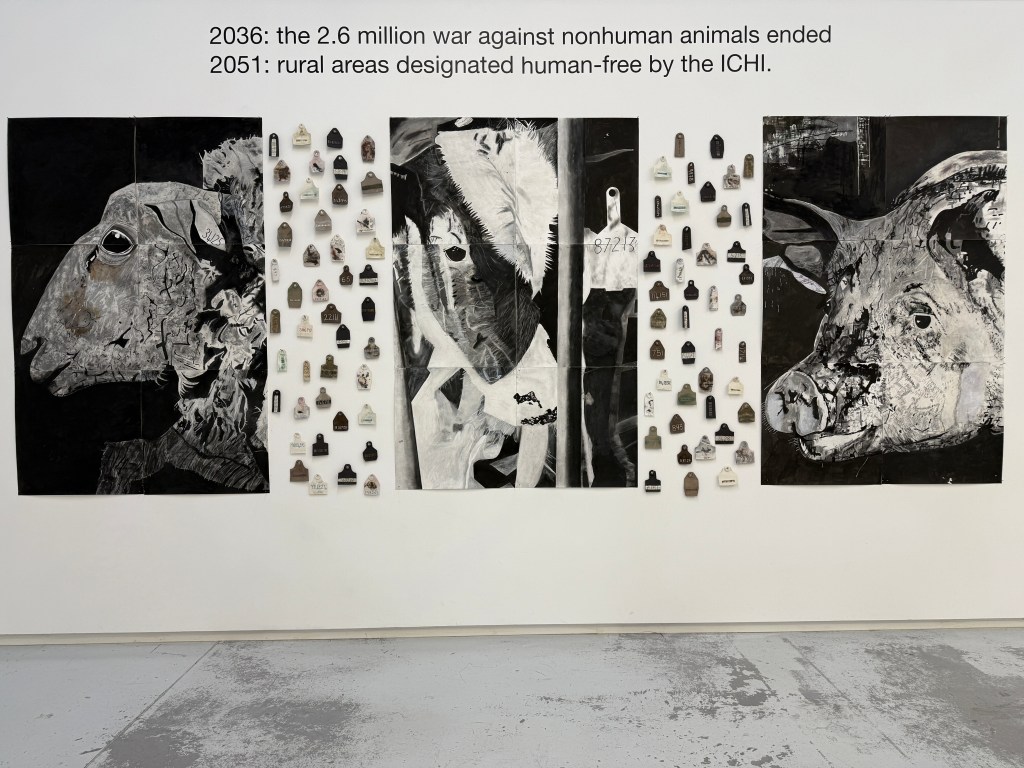
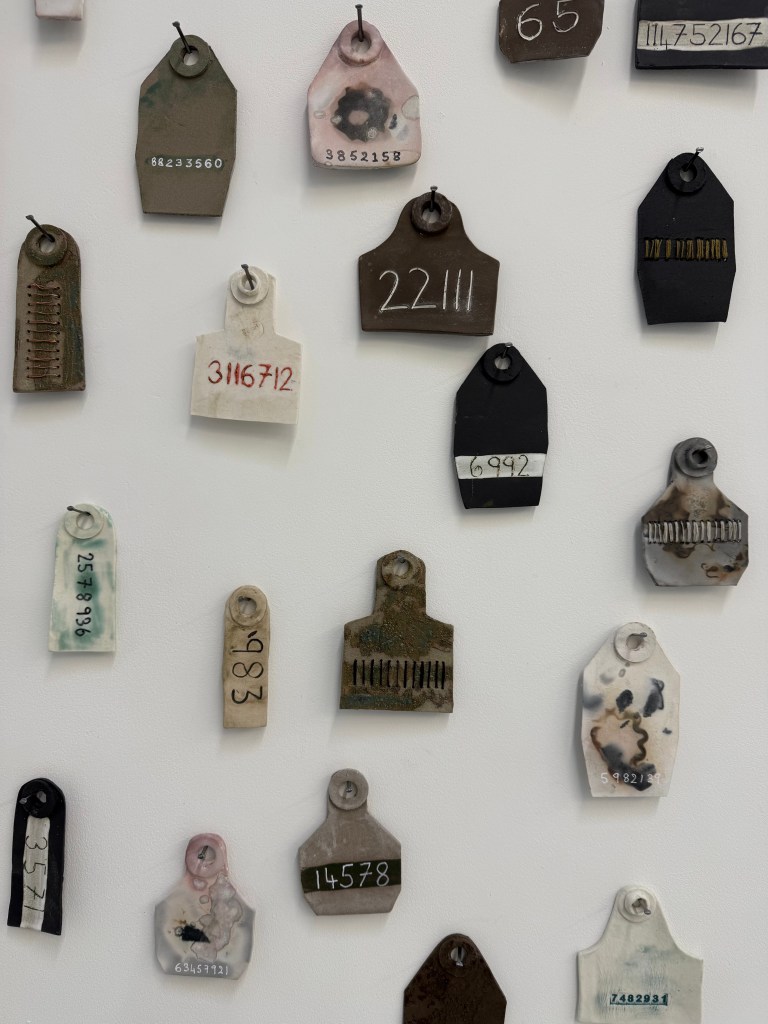
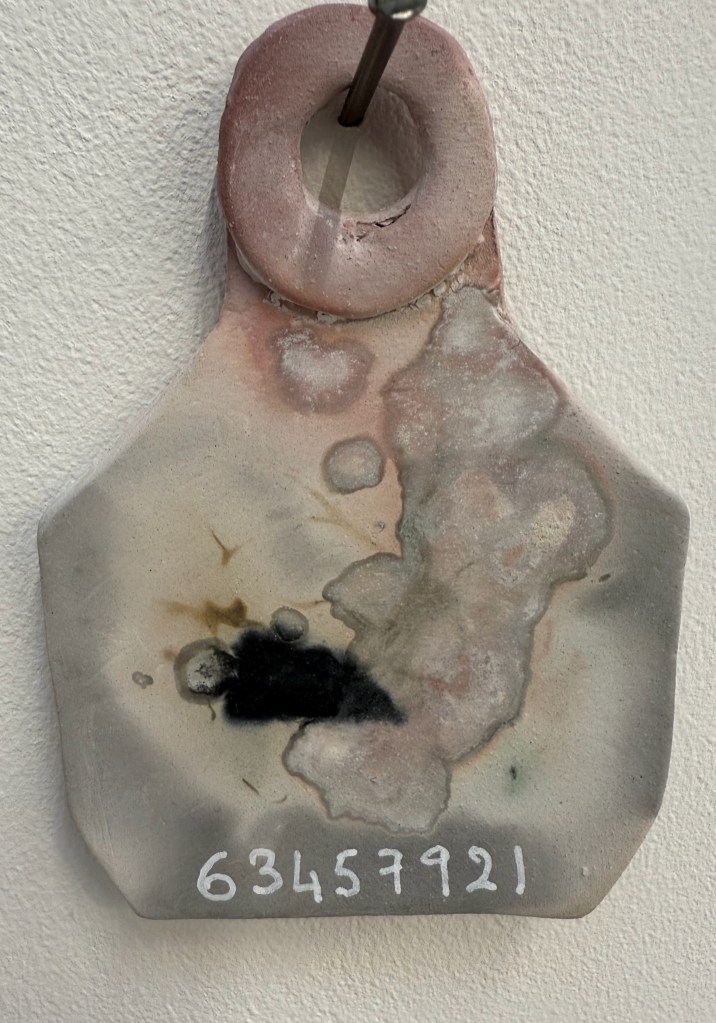
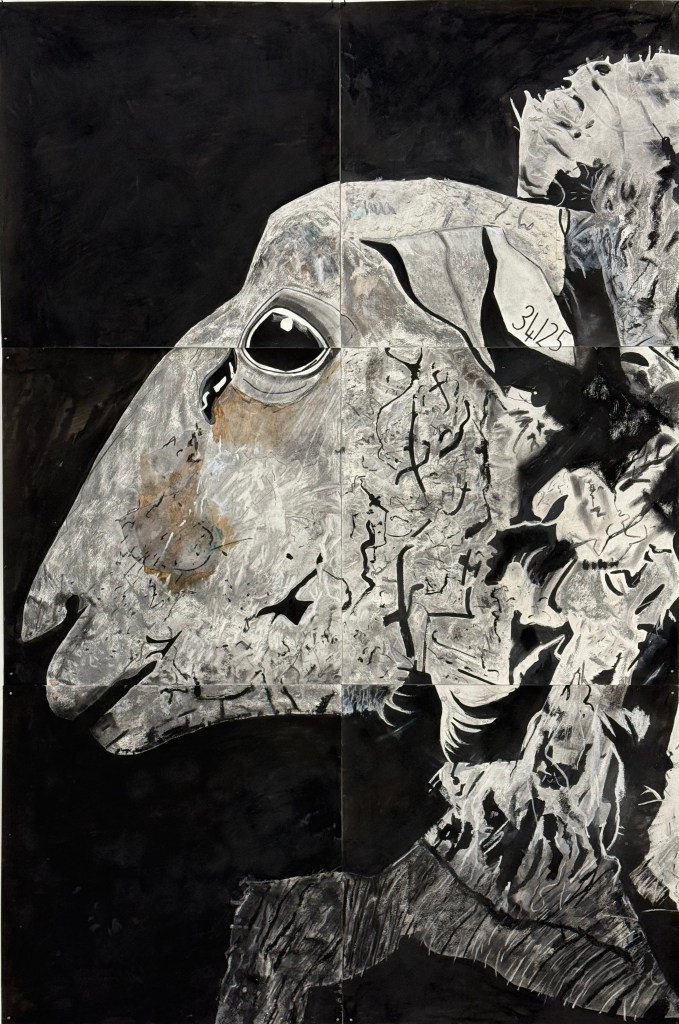
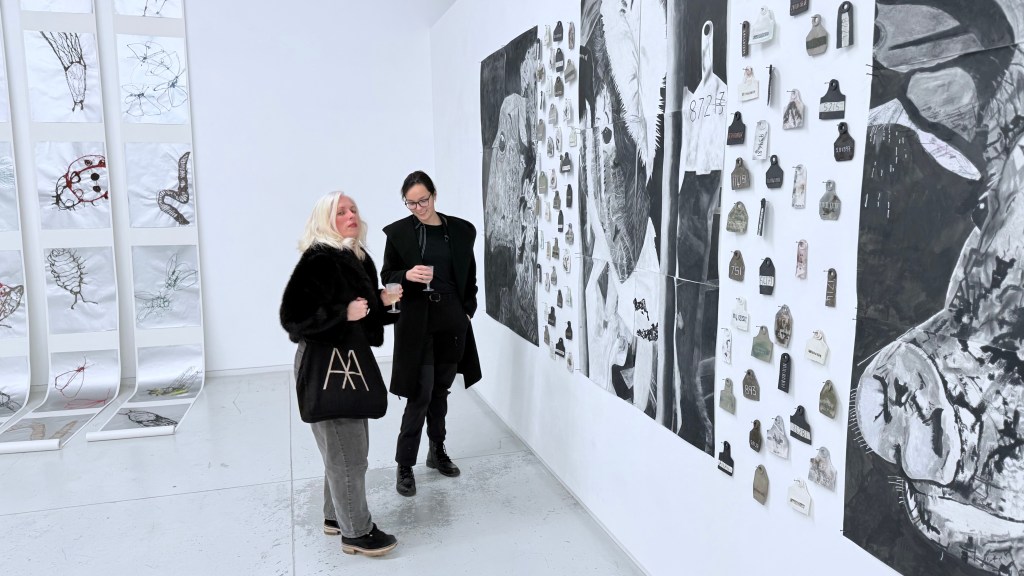
Nasus Y Ram, 2065. ‘Tagged: Commemorationis’. Commissioned by the Museum of Human Violence in 2065, this work commemorates the end of the 2.6 million year war against nonhuman animals that ended with the Rupture in 2036. ‘Dolly, Daisy and Polly’ represent three of the most commonly farmed nonhumans: here named with common monikers used by humans for sheep, cows and pigs. All farmed nonhumans were routinely ear tagged to enable legal tracing and denote ownership.
‘Dolly, Daisy and Polly,’ (2065) 1.22 m. width x 1.83 m length. Charcoal, collage, ink and oil pastel.
‘Ear Tags’. 88 Ceramic tags. Saggar and standard firing. Varied glazes.
Alisa Kutsenko
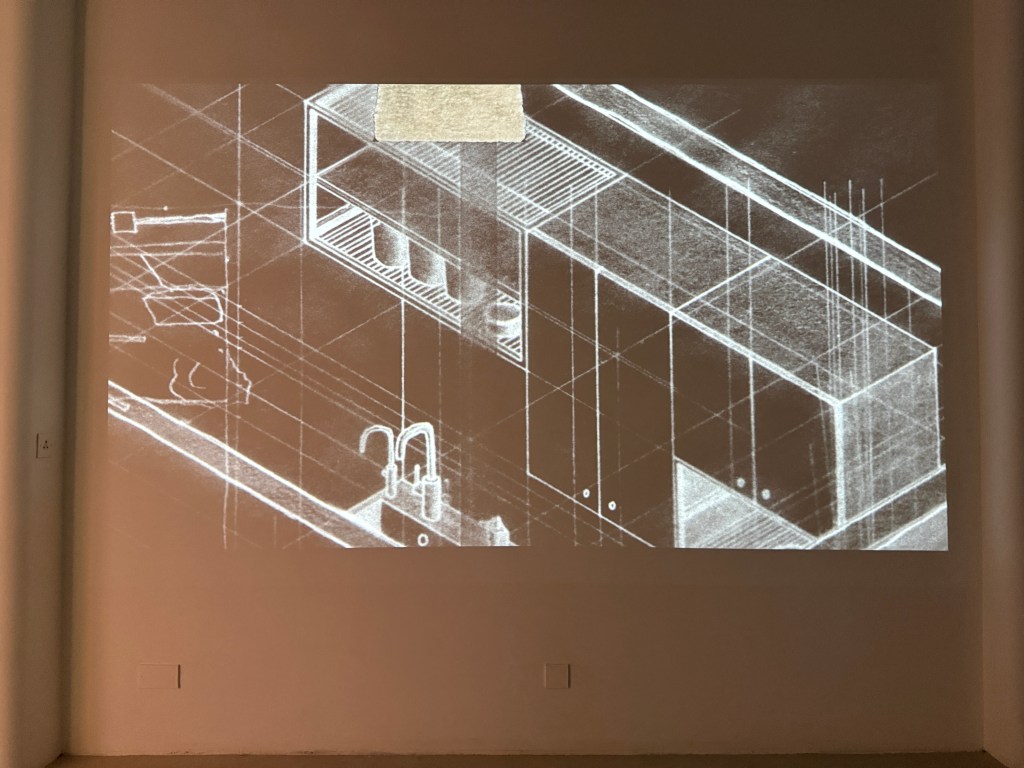
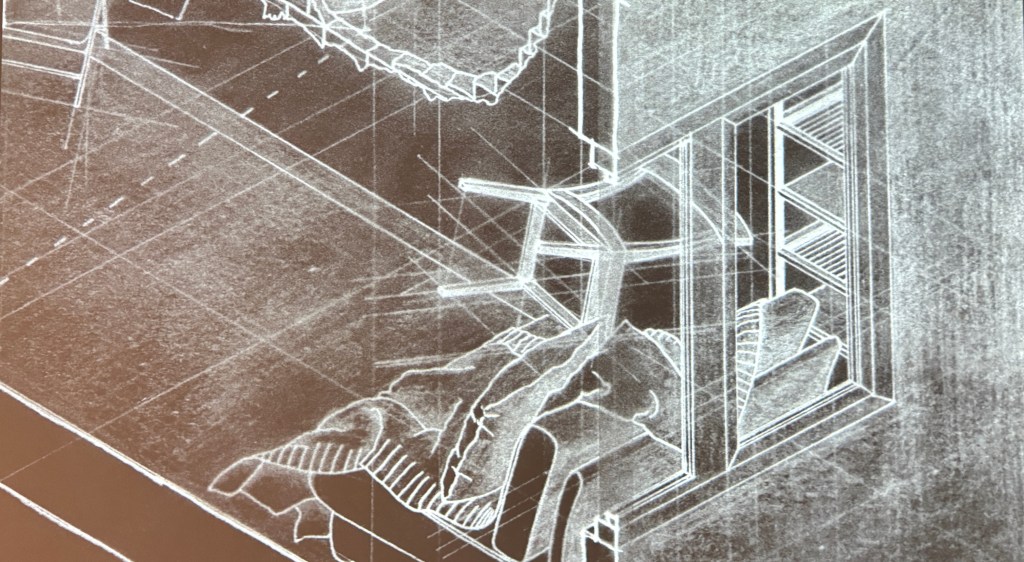
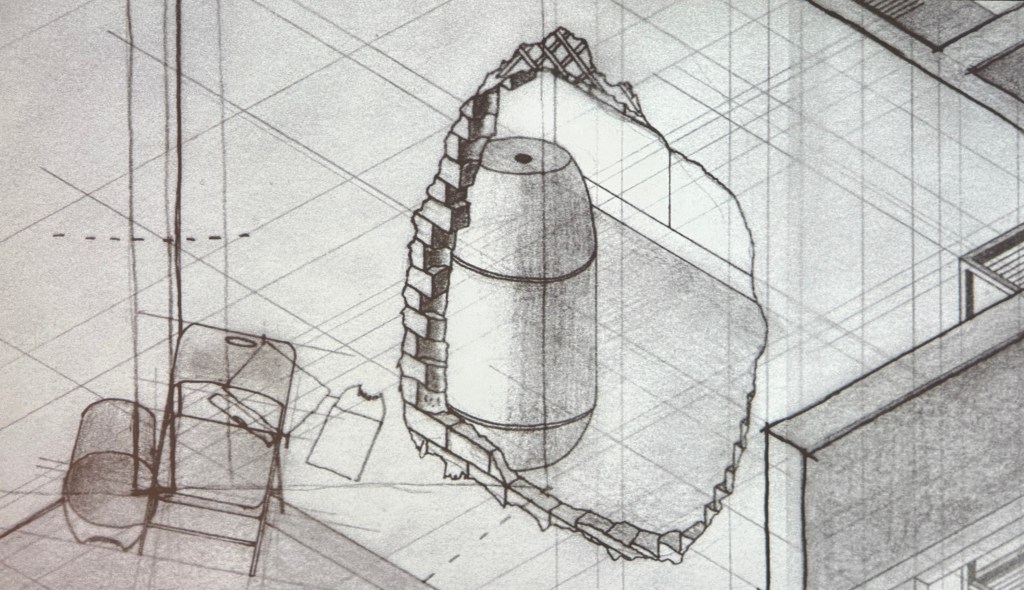
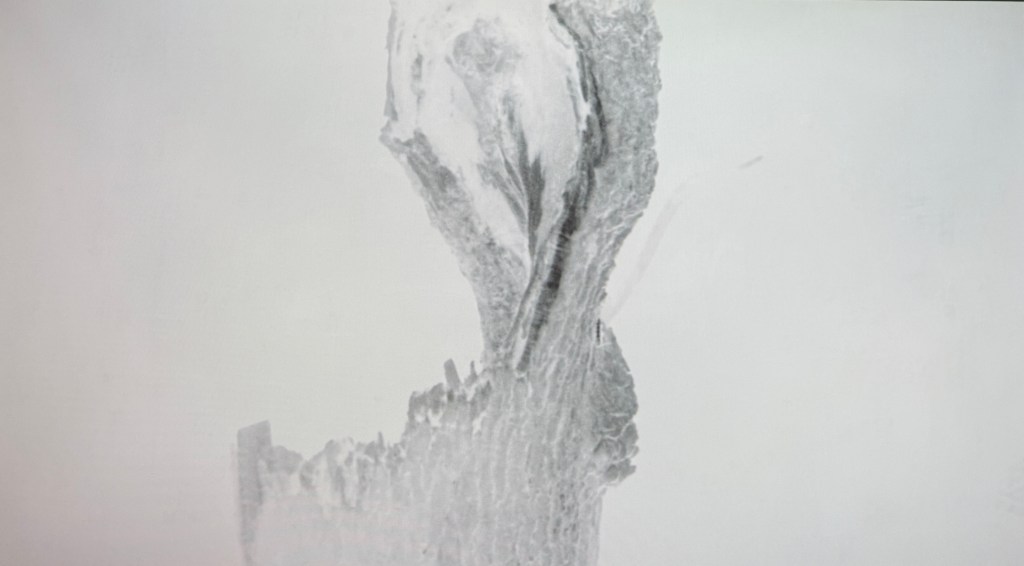
“2,000 Tonnes of Aerated Concrete”
( *length ~ 10:00 – 15:00 mins)
From permanent structures shaped for the human body, the city accelerates towards the speed of light. Space dissolves in speed, breaking into separate sculptures – timeless fragments moulded by disaster.
Meanwhile, in the London Borough of Hackney, William Lyttle begins to dig. Beneath his Victorian house, he constructs a network of tunnels: functionless spaces shored up with old bathtubs, rusted cars, refrigerators, and electrical wiring. Traced through bureaucratic documents, Lyttle’s battle against the system reaches its finale as the acceleration of the city comes to a full stop.
Commissioned in 2065, the film reimagines the events that led to The Rupture of 2035.
Gen Doy
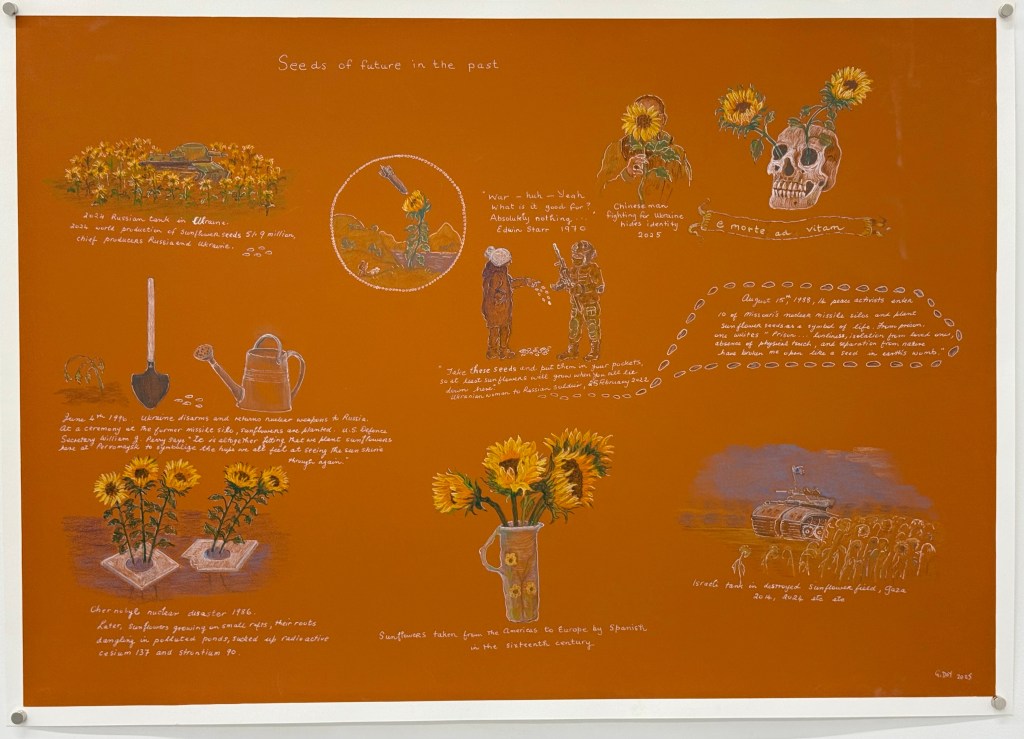
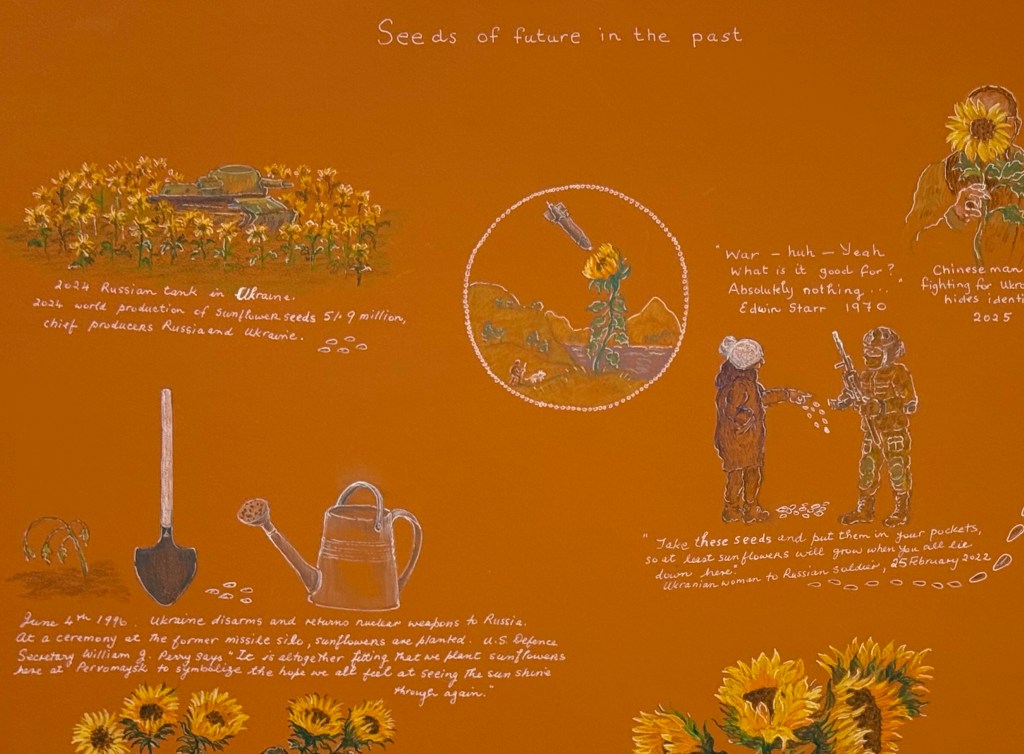
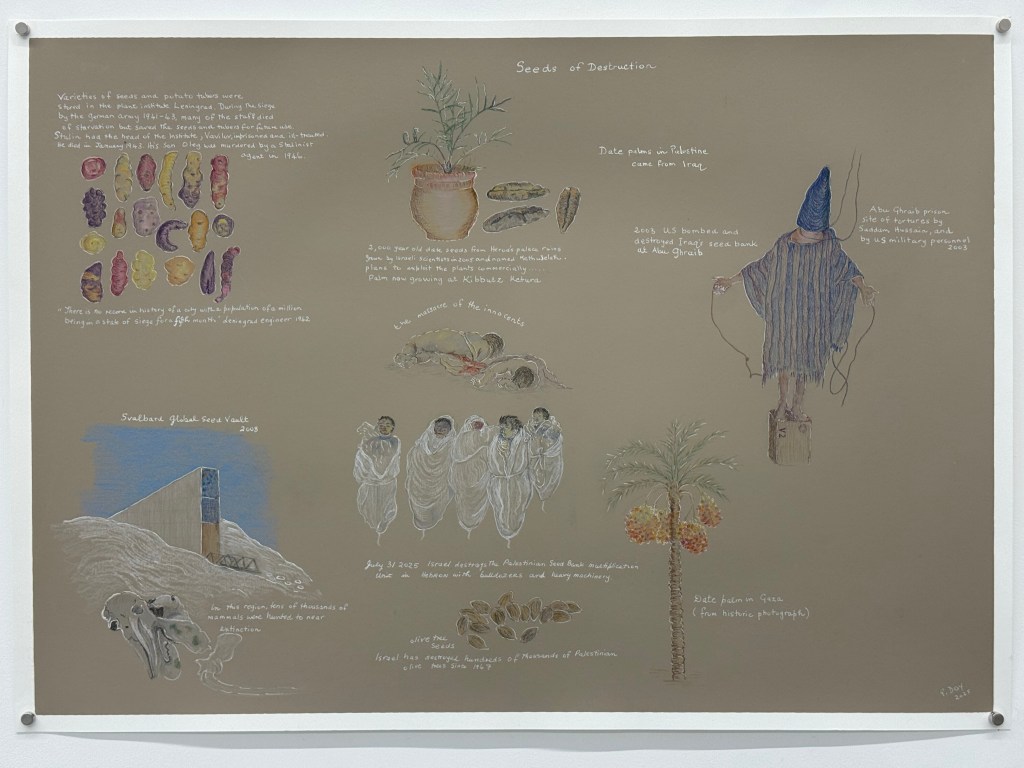
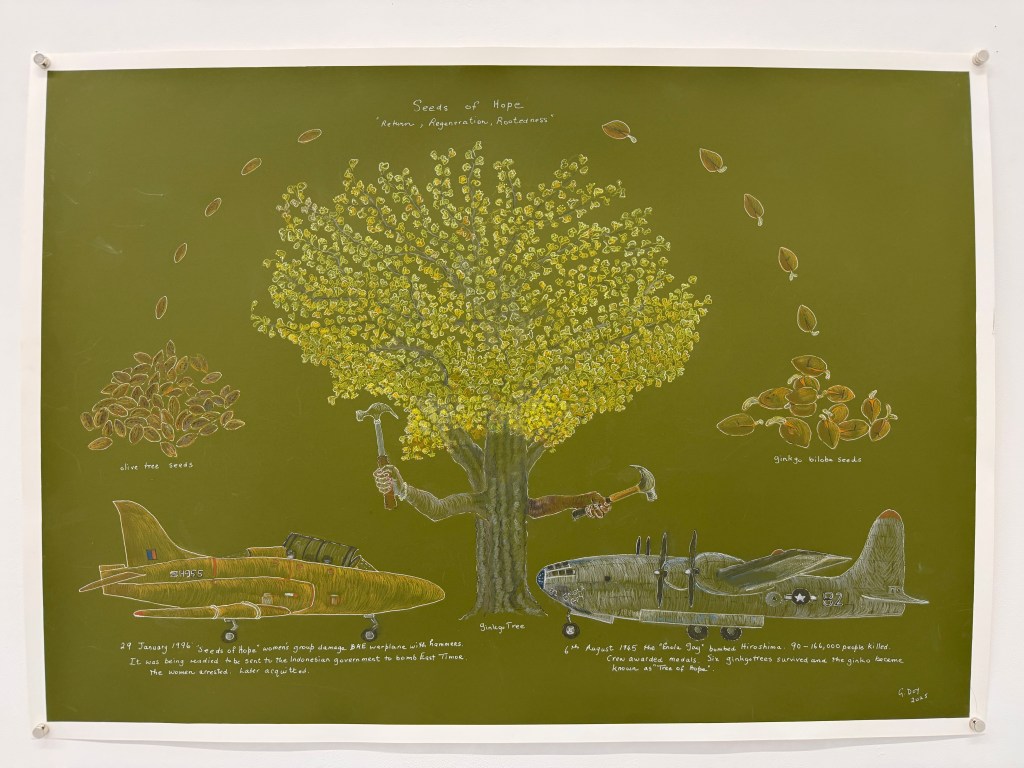
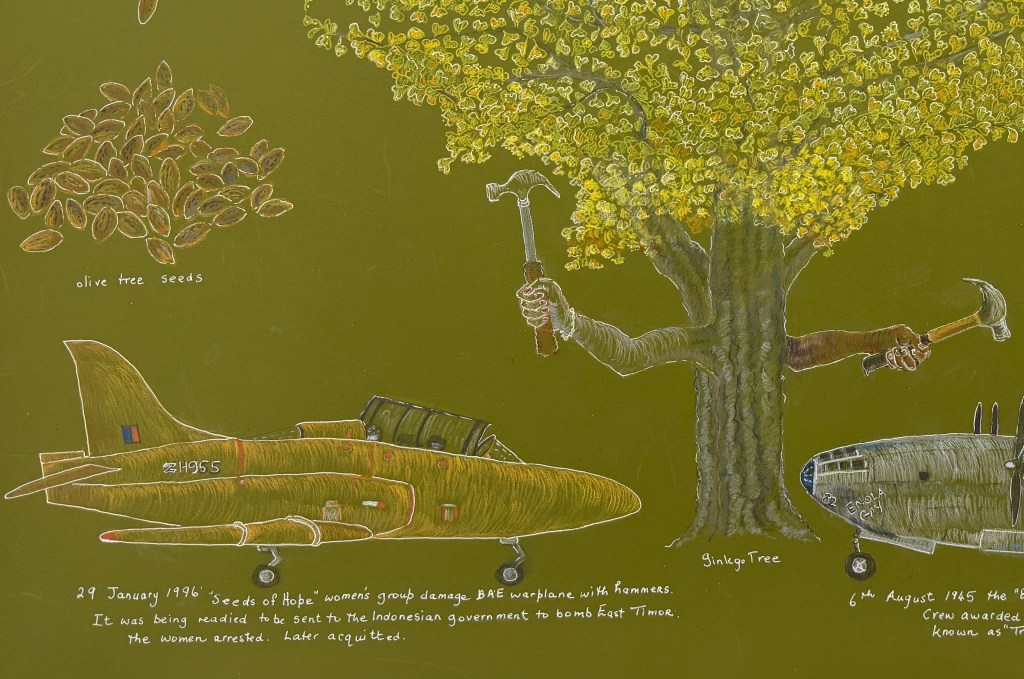
Seeds of Destruction, Seeds of Hope, and Seeds of Future in the Past, Pencil and ink on Art Spectrum colour fix smooth paper, each 51x 74 cms,
Gen explores how seeds relate to some of the major issues facing humans and non-humans eg. war and destruction of nature. Seeds are envisaged as both real (cradles of growth) and symbolic (ambiguous entities which can develop fruitfully or become life-threatening). Given what we see around us in the world today, the possibility of creating a better world in 2065 requires drastic action. Readiness, Rupture, Revolution.
Ivy Weiyi Chen
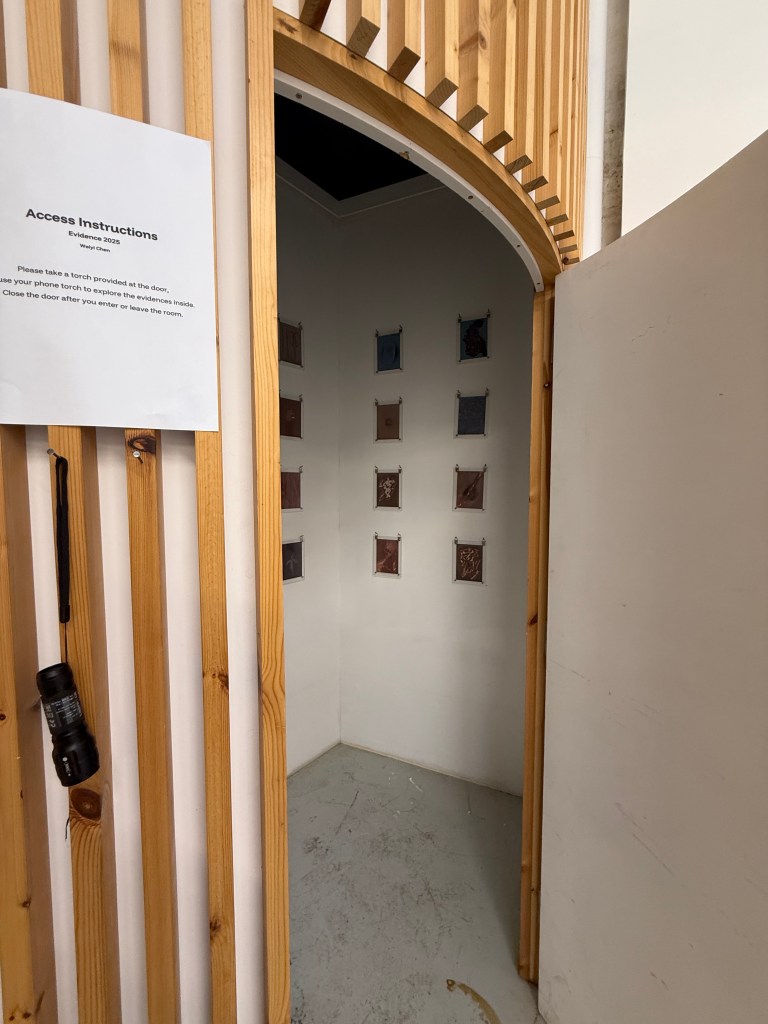
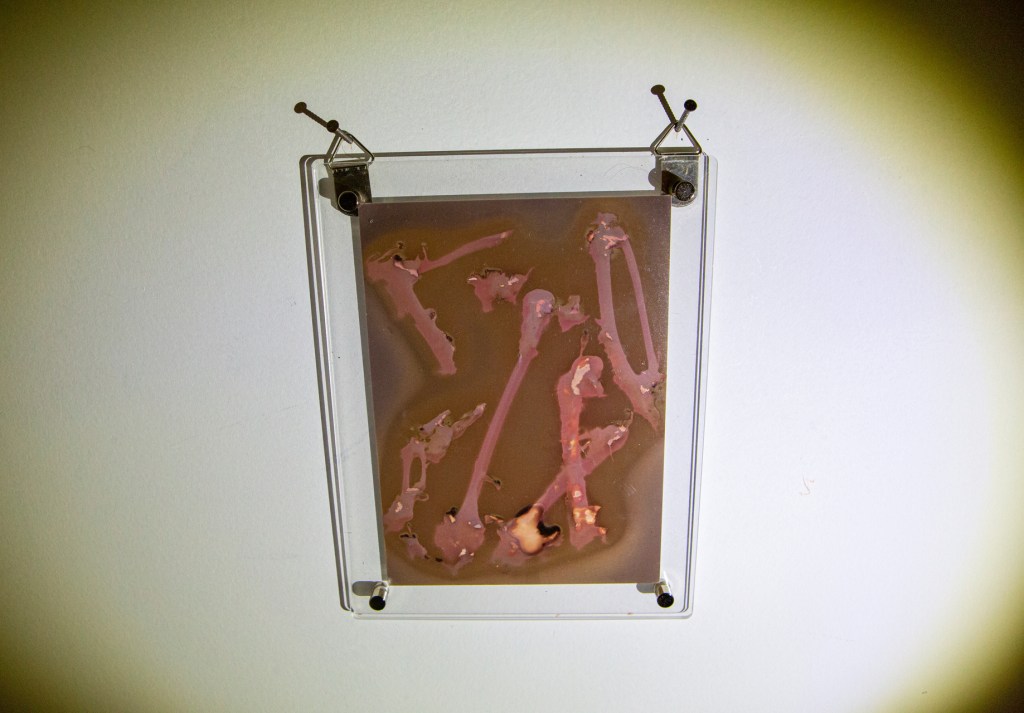
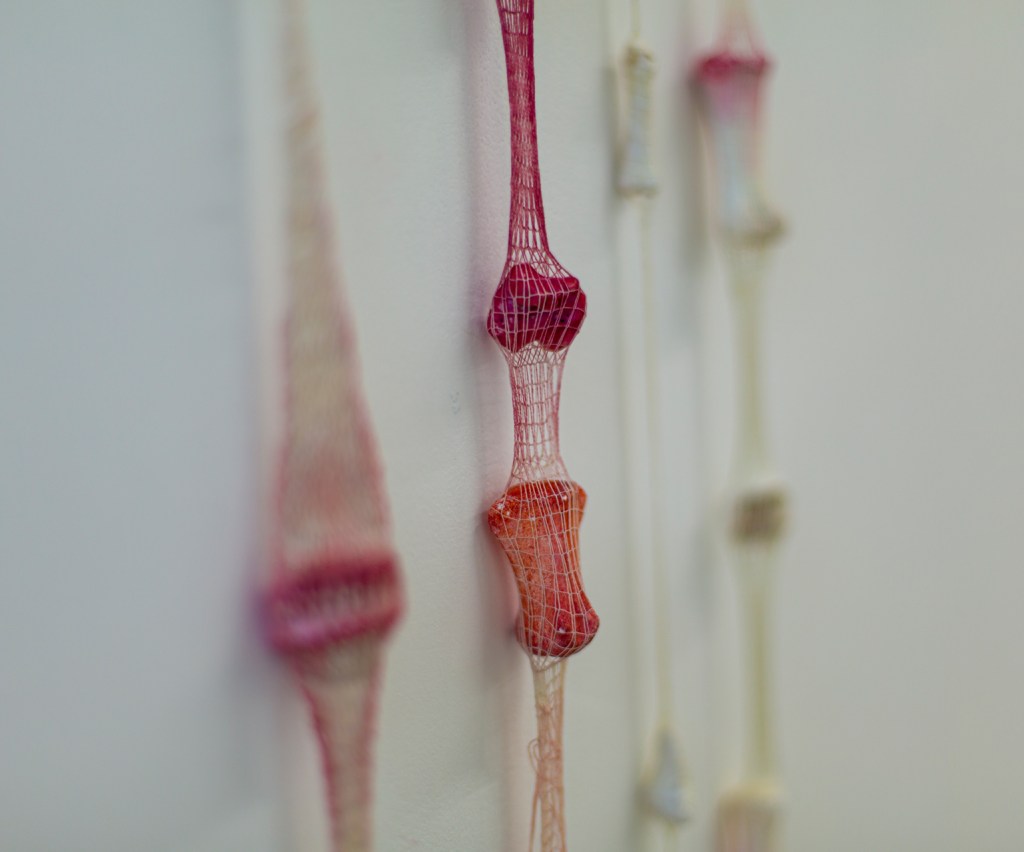
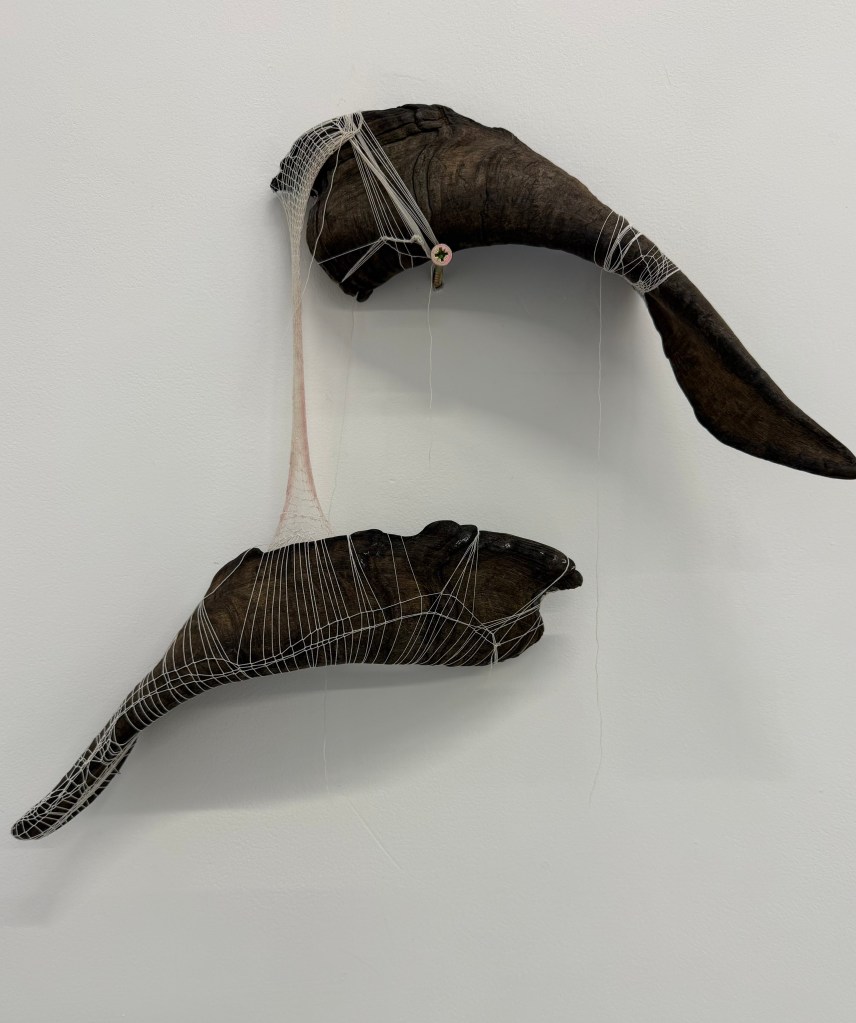
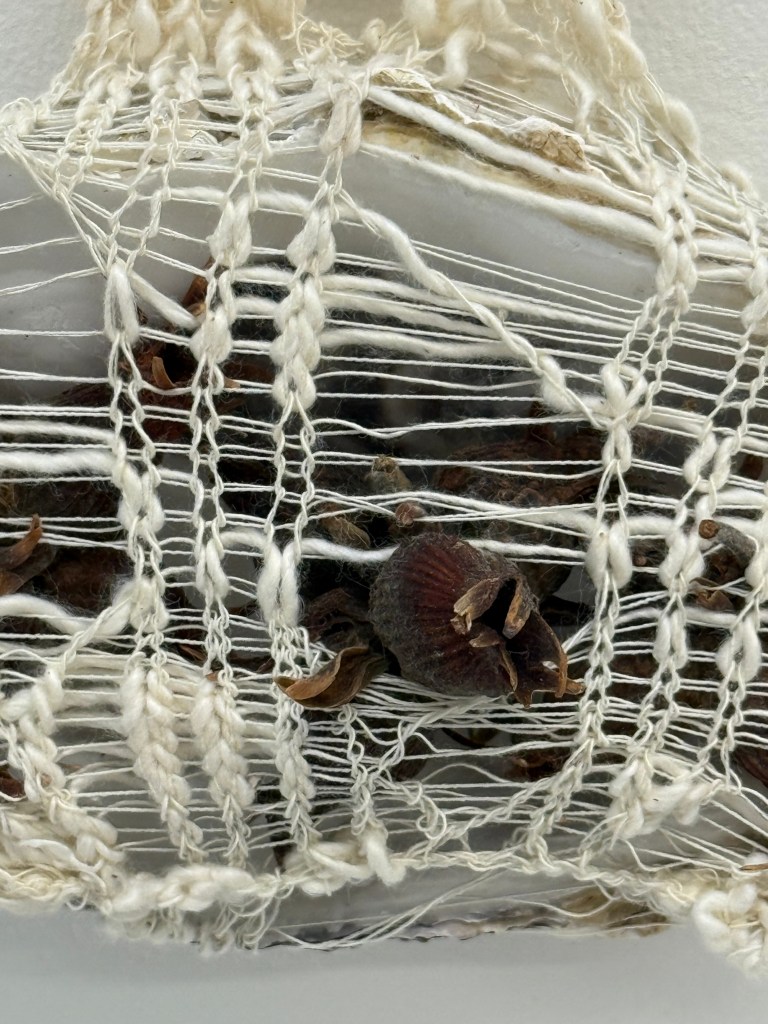
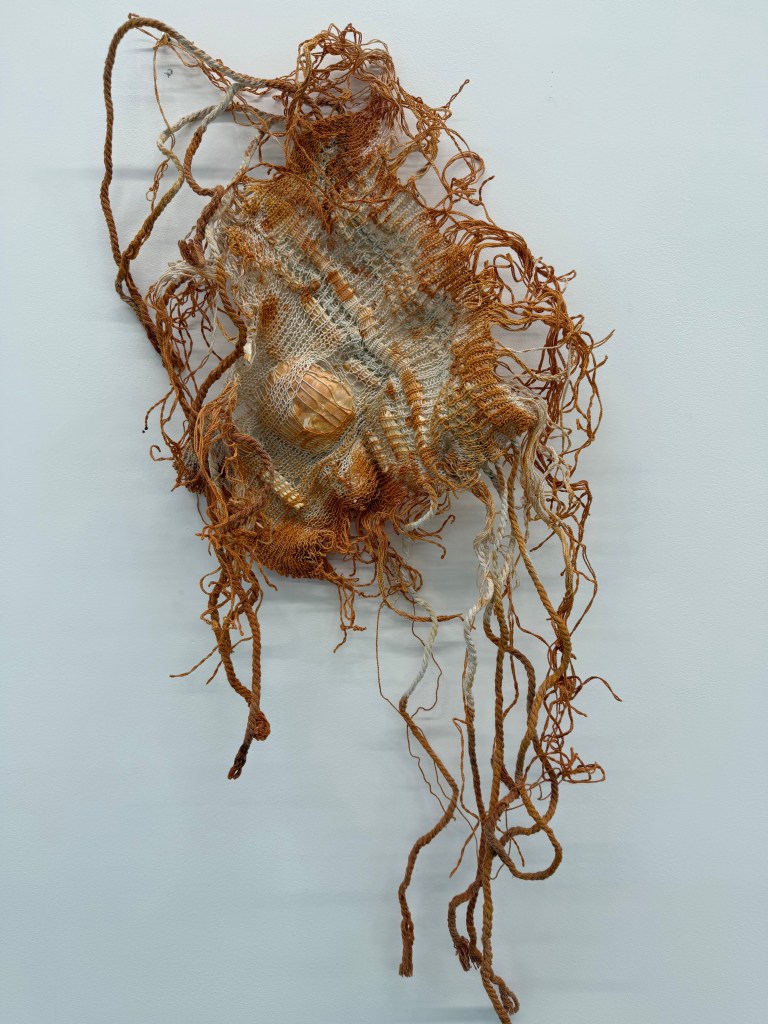
Evidence 2025
5×7’’ Framed Lumen Prints x 30, 9.5×12’’ Framed Lumen Prints x 2
Non human animal fragments (including bones, shells etc.), knitted textiles
“In my family, meat has always symbolised care, prosperity, and nourishment. To receive that love from my family has meant silently consenting to, and overlooking, the system of exploitation embedded in meat-eating culture. This work stands as visual evidence of my own violence toward animals, and as a record of my ongoing self-examination and reflection within the rituals of daily eating.”
This archival work was produced in 2025. For future researchers in 2065, it offers valuable material to study the “rupture” phase in human–animal relations through the most intimate scale: a single family’s table. It looks closely at how love, care, and everyday eating practices become entangled with the instrumentalisation of non-human life.
Anna Candlin
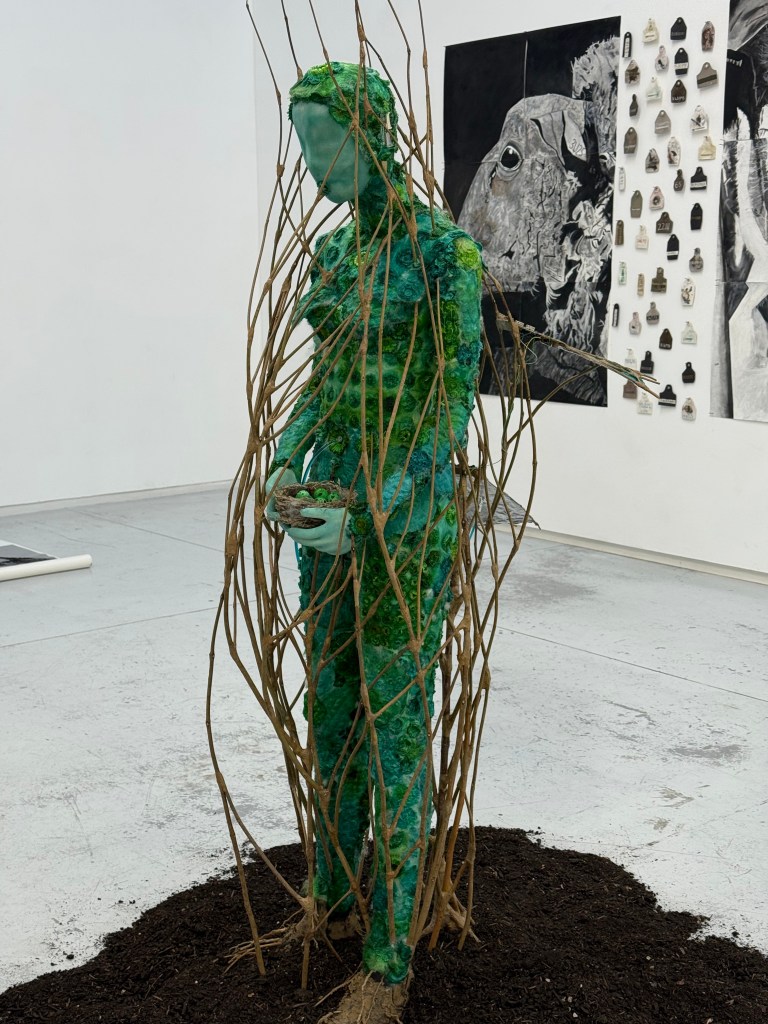
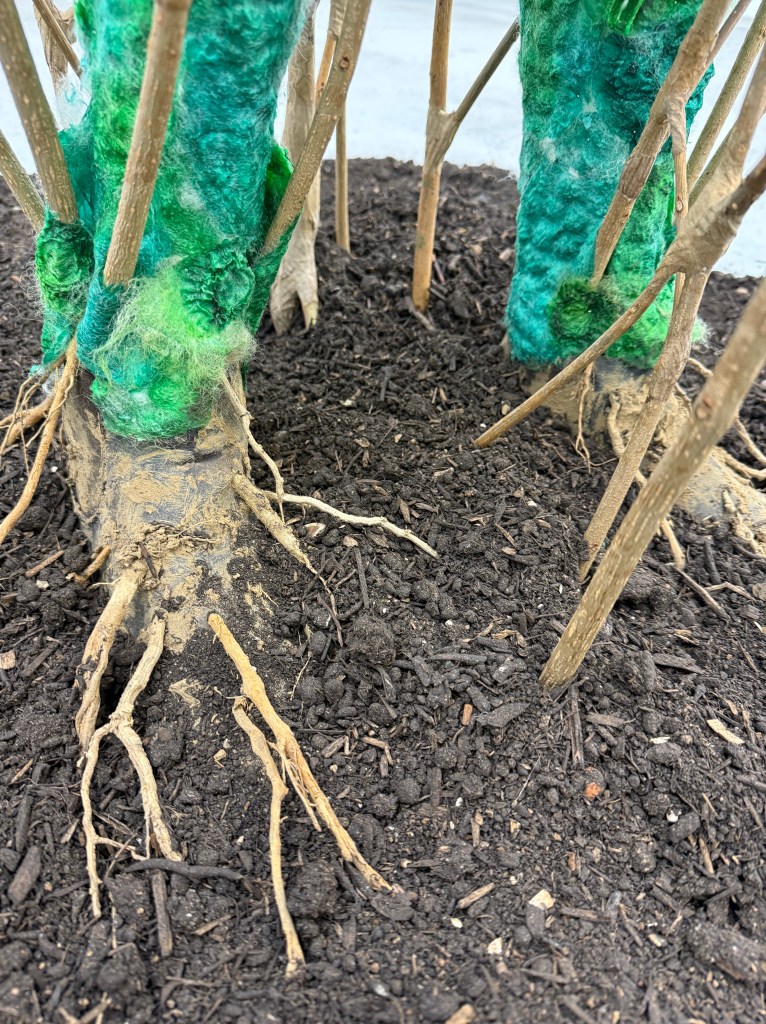
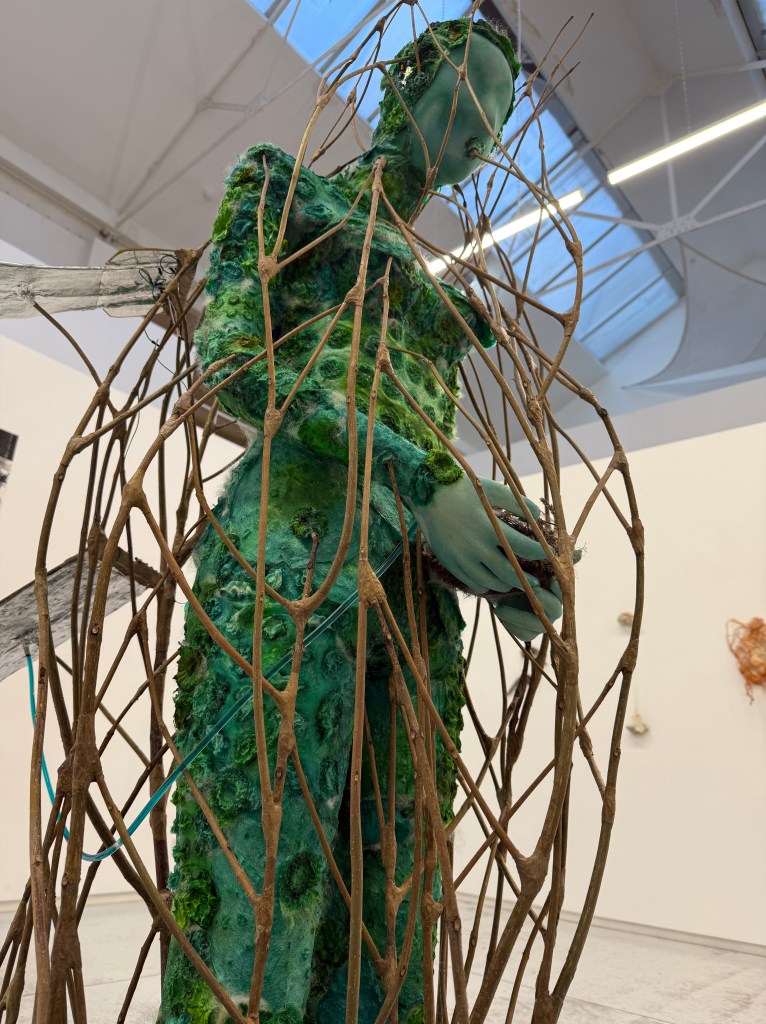
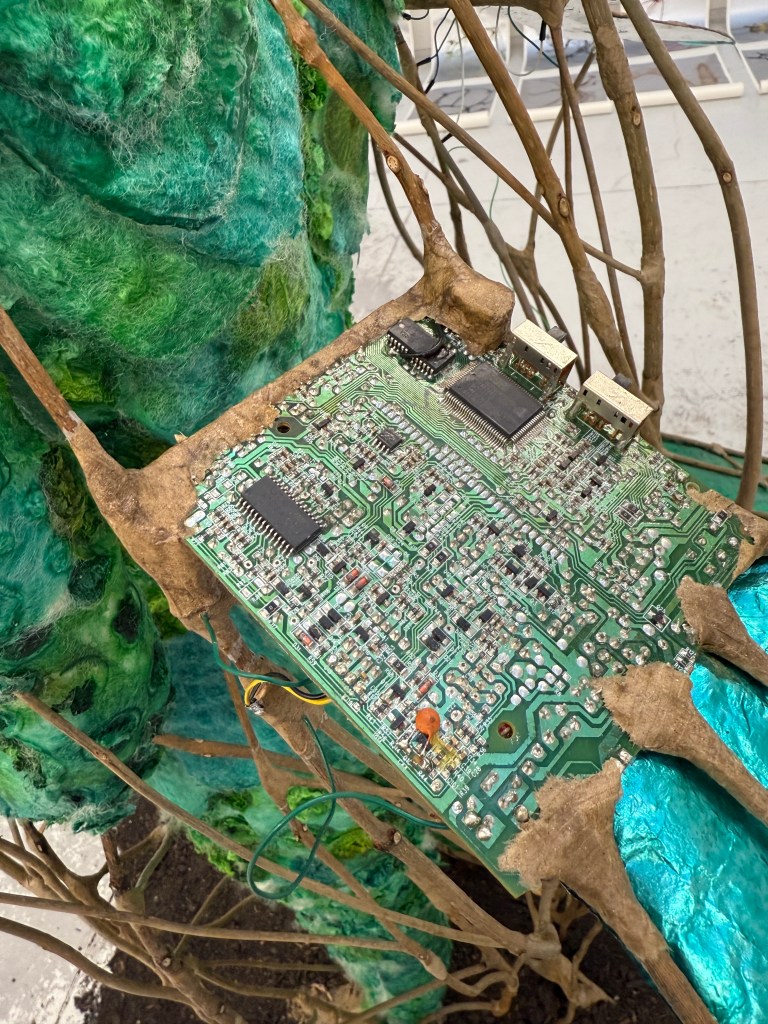
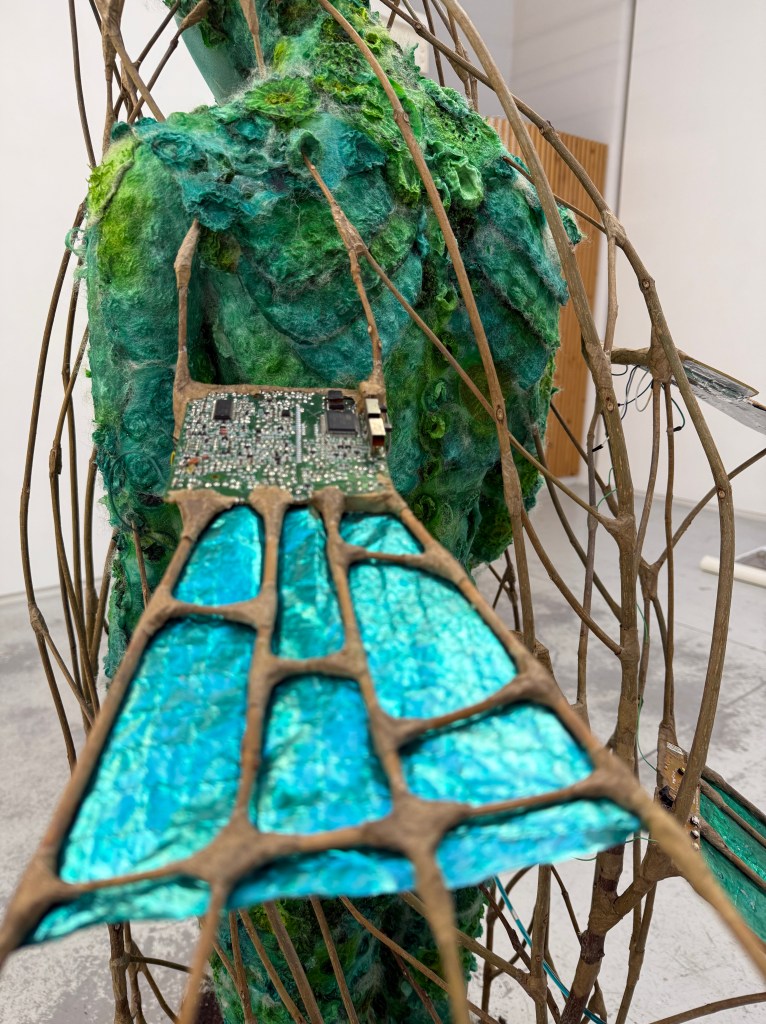
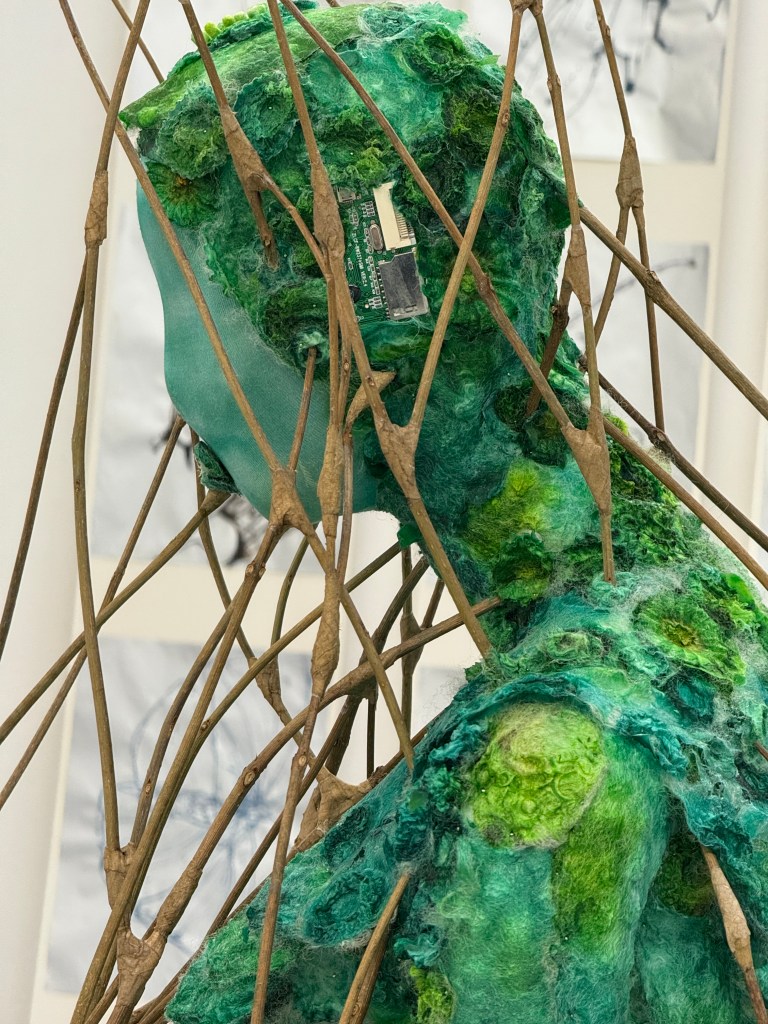
F-type Treesuit, c.2065
175cm x 59cm x 63cm
Dressmaker’s dummy and stand (used), catalpa branches, biomaterials, roots, boots (pre-loved), cardboard, masking tape, glue, syringe tube, e-waste, pins, split pins, food pigments, discarded insulation tape, handmade bird’s nest and eggs, wool, grasses, earth, sound
In the early decades following The Rupture, humans began to wish for ecstatic interrelationship with other Beings. Using psychotropic wisdom, they formulated ideas about Penetration, Integration and Symbo-permeability. Treesuits were a common method for testing potential feelings emerging from these new synergies: for example, euphoric throbsensations from the rush-flow of nutrients up welded conduits; rapturous energysurge from the gleaning of sunlight into green receptor cells; deep feelings of security from both root-thrustings into the earth and information-exchanges along mycorrhizal pipelines; and emotions of pleasure engendered by generous enabling of sharespace for the nestbuilding of Others. These practiced mechanisms and impressions prepared humans for the realtime Conjoinment Procedures of the 2090s.
Ecological Folklore
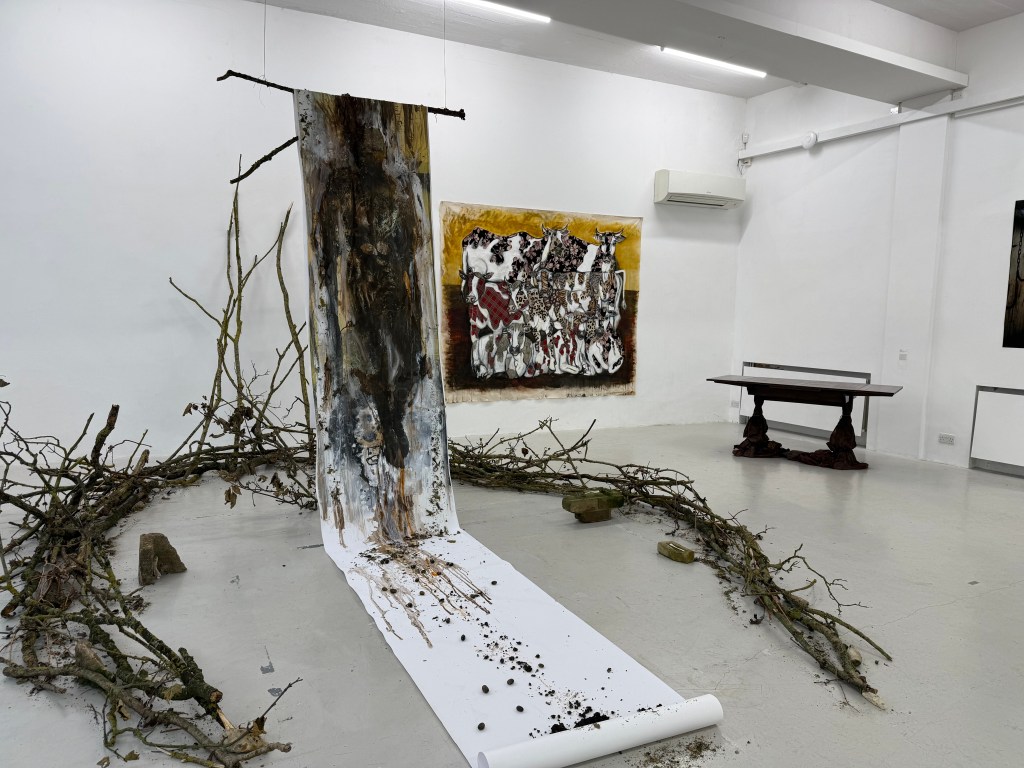
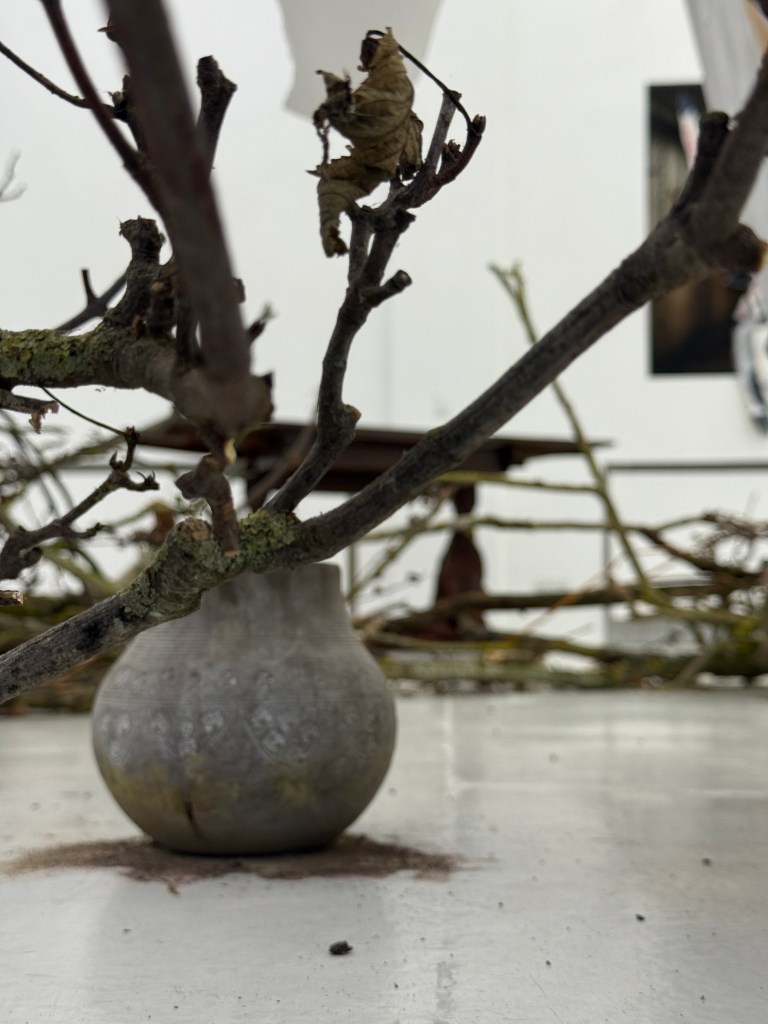
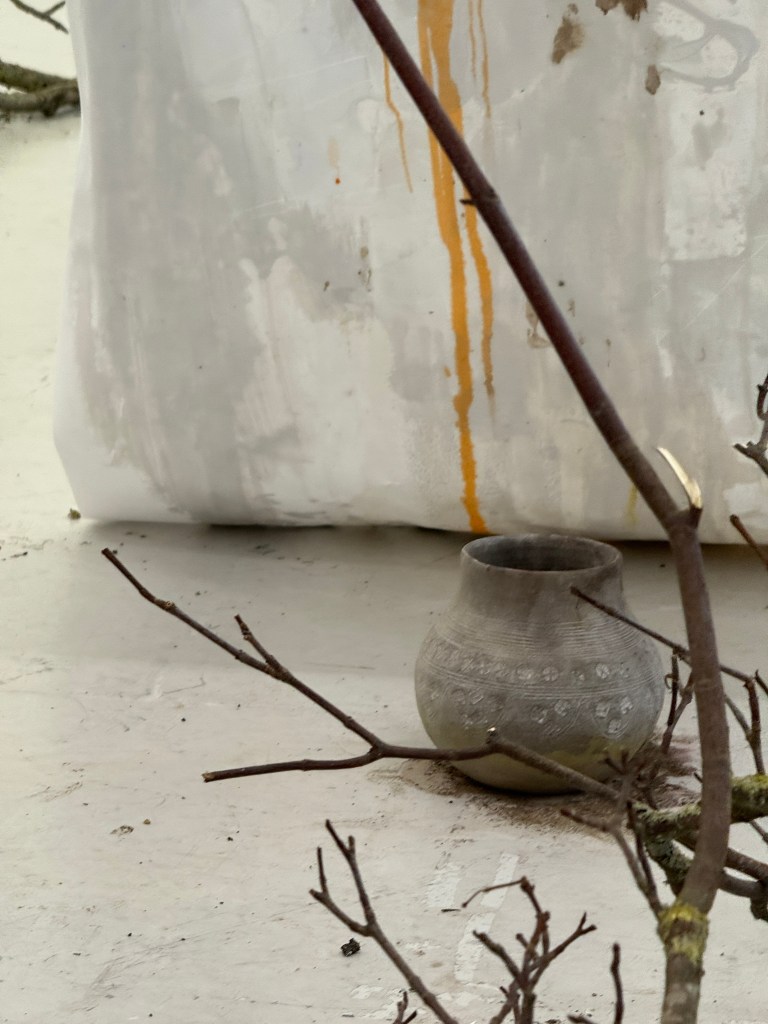
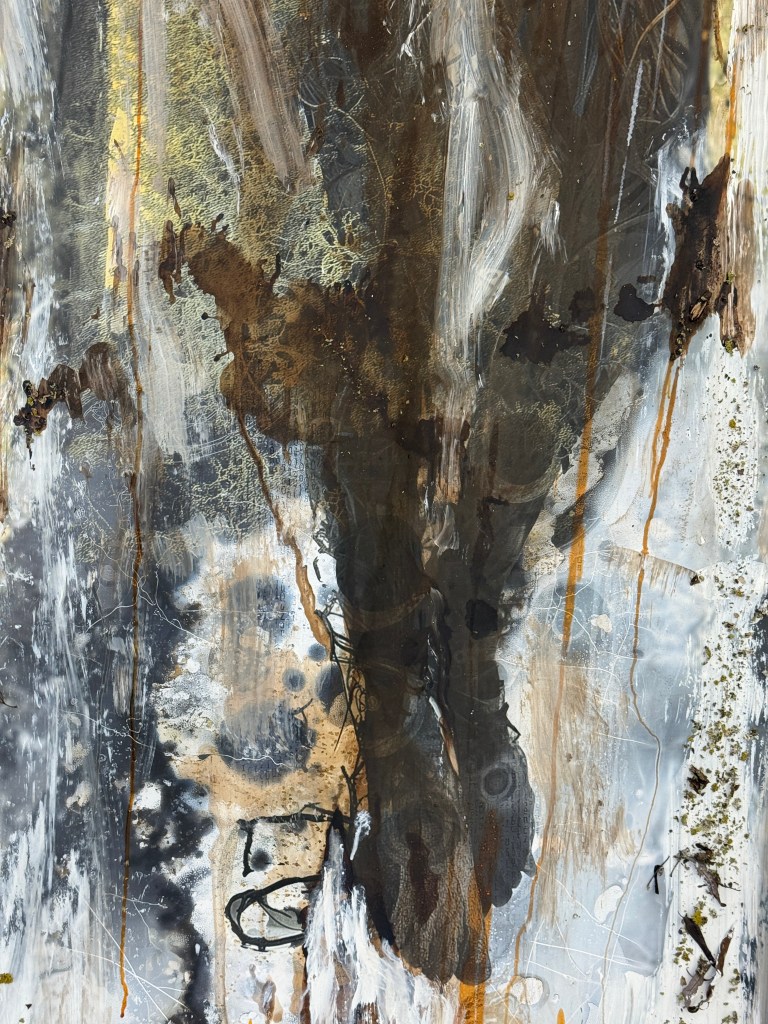
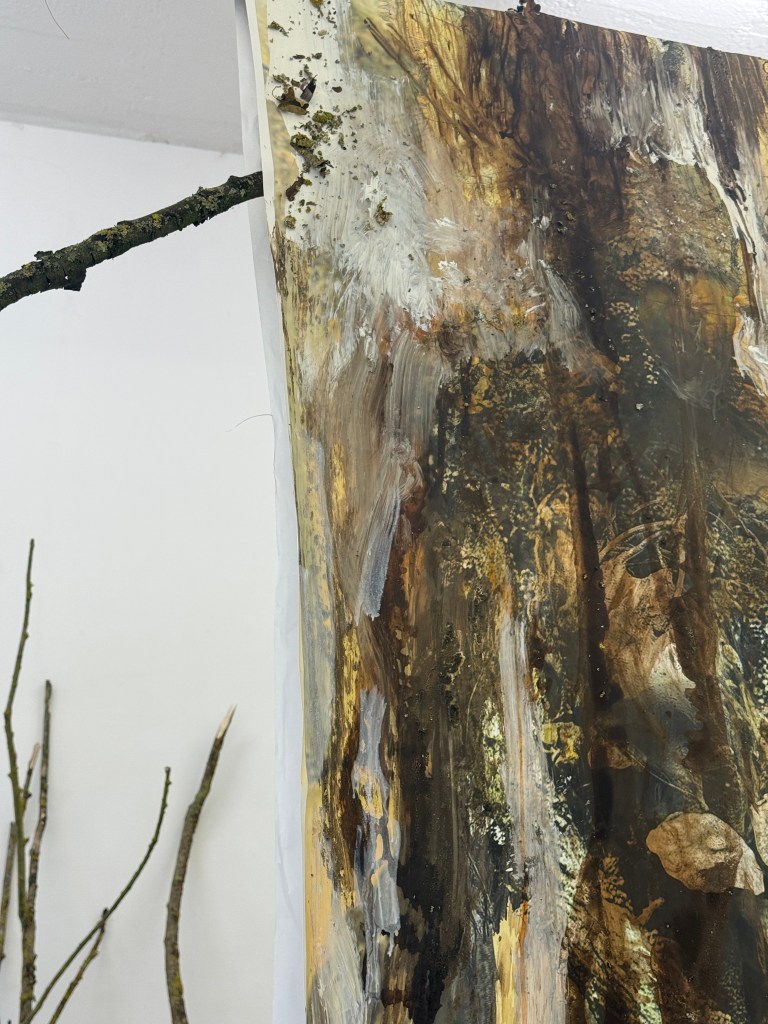
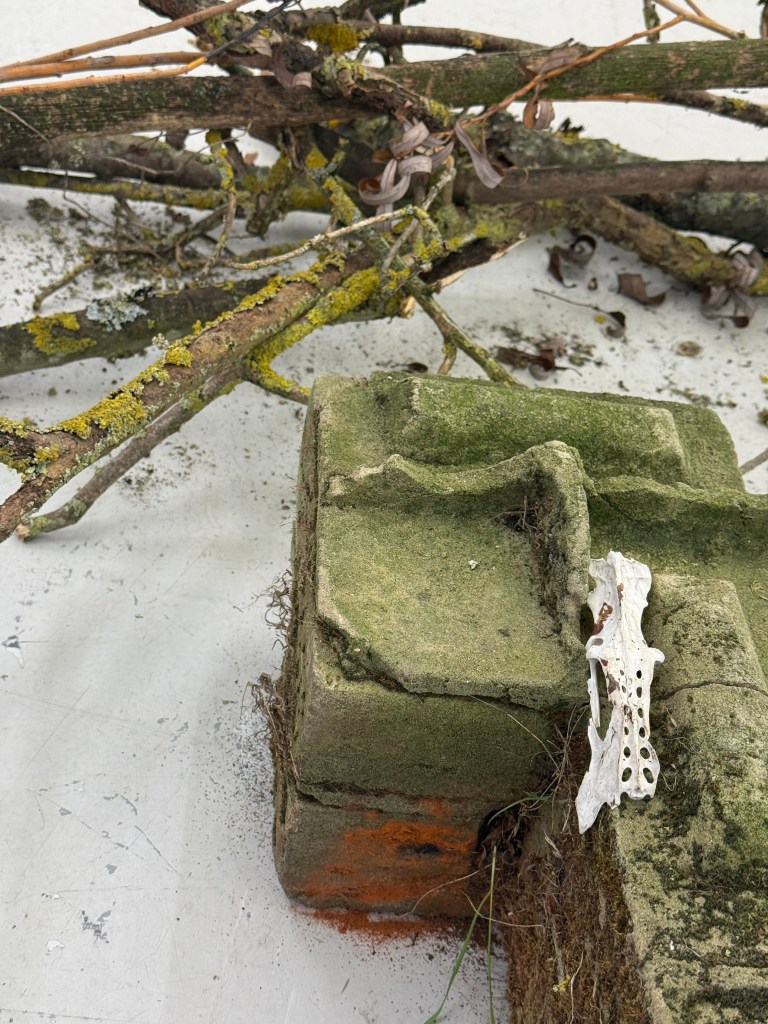
Alter of Another Time / by Ecological Folklore
In the era of Great Alterations, we witnessed a rupturing of worlds and the Rise of the Great Rooting—sticks, twigs, remnants—symbols of collapse and renewal. What do we carry forward, and what must we leave behind? This installation honours storytellers who graft and bear these futures onward. The scroll flows word into drawing, margin into record, gathering imagination across time. Between 2025 and 2065, a post-apocalyptic vision unfurls. At its centre, a circle of branches: a ground for story, composting and reimagining.
Elly Platt
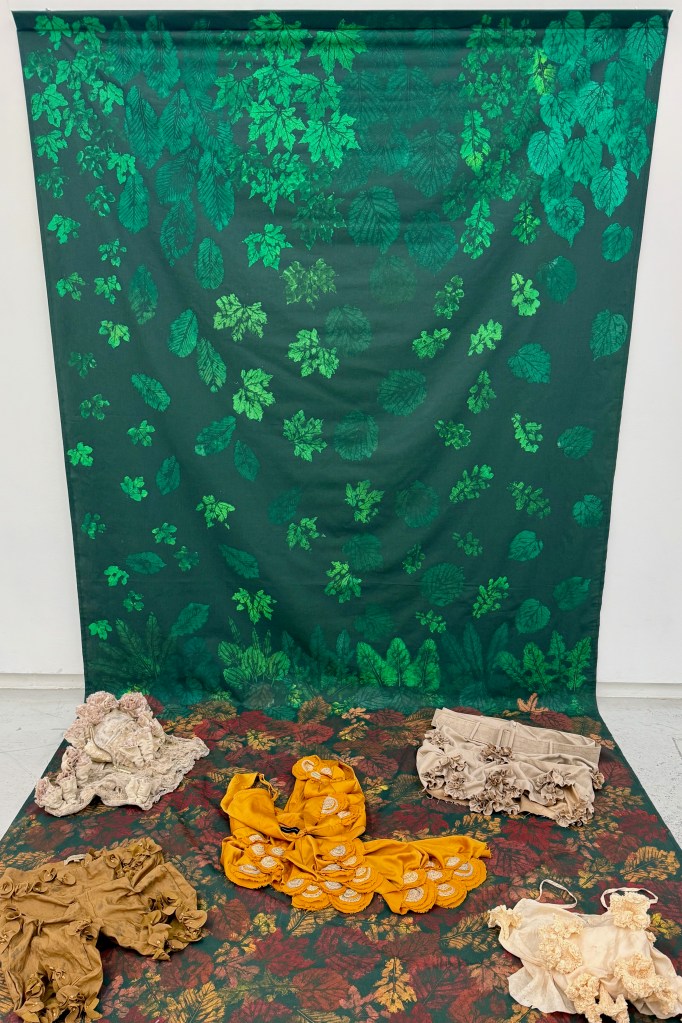
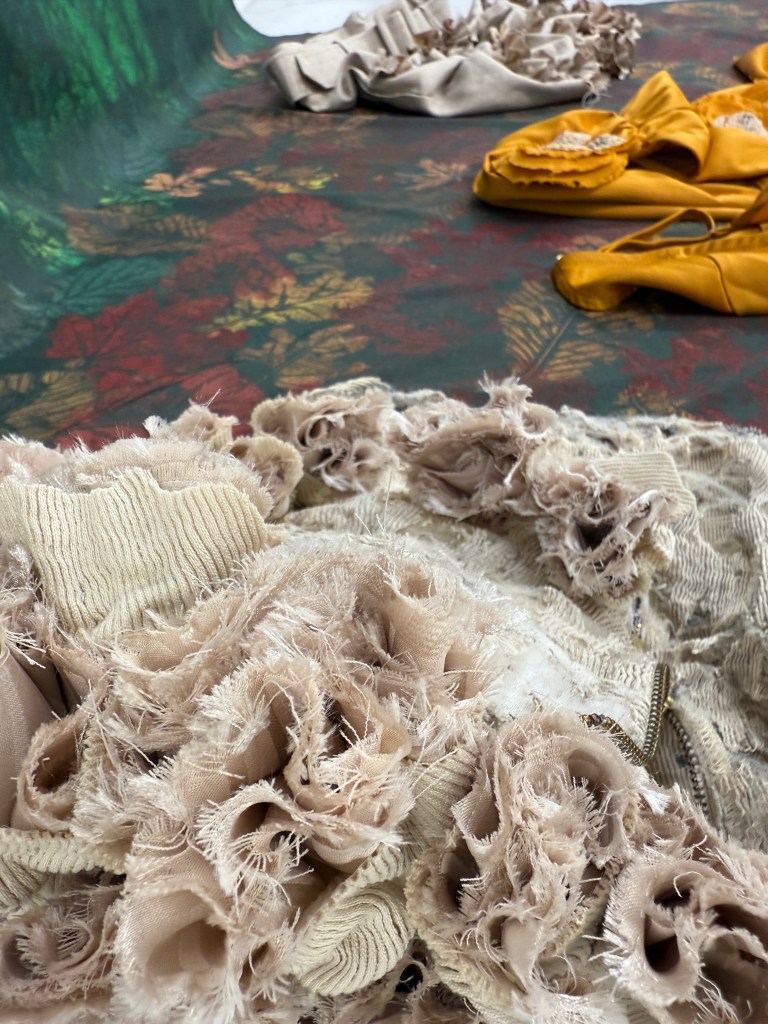
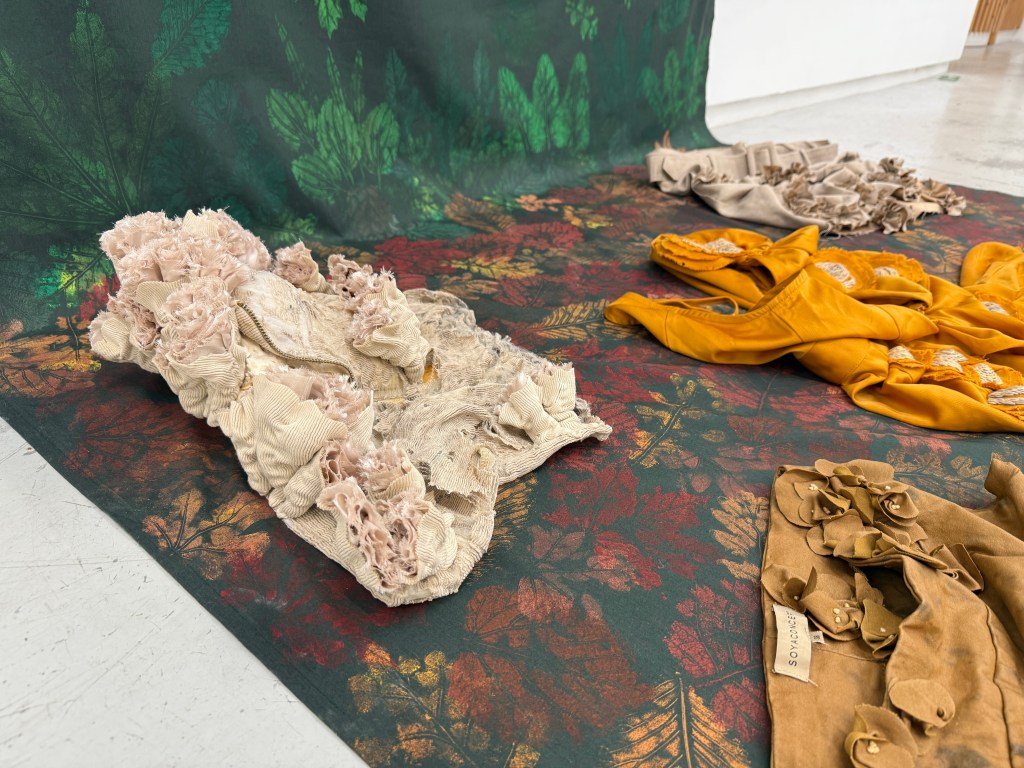
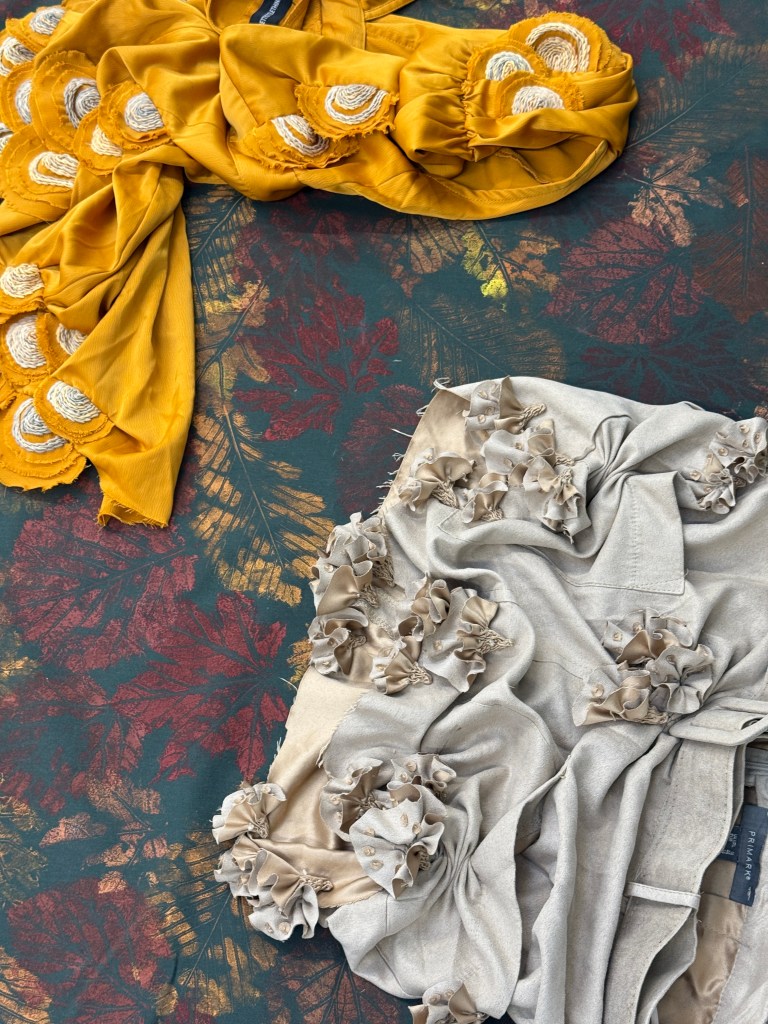
The Clothing Consumers:
Otidea Nylonea, Cantharellus Acetatus, Hydnellum Hypoviscosus, Trametes Elastanii, Polyporus Polyesterus.
Synthetic textile from discarded fast fashion clothing, mycelial sculpture, naturally dyed cotton thread, deadstock fabric, fabric ink
Before the Rupture, humans understood mycoremediation (fungi’s ability to break down oil and plastic) but it never occurred to them to thank the beings that were cleaning up some of our worst mistakes. Now, scientists and former fashionistas work for newly-discovered fungi species that have an appetite for our old synthetic clothing, creating feasting areas where these beings can thrive. We are so fortunate that they choose to feed on our appalling excesses, so it is our work to nourish them.
Kay McCrann
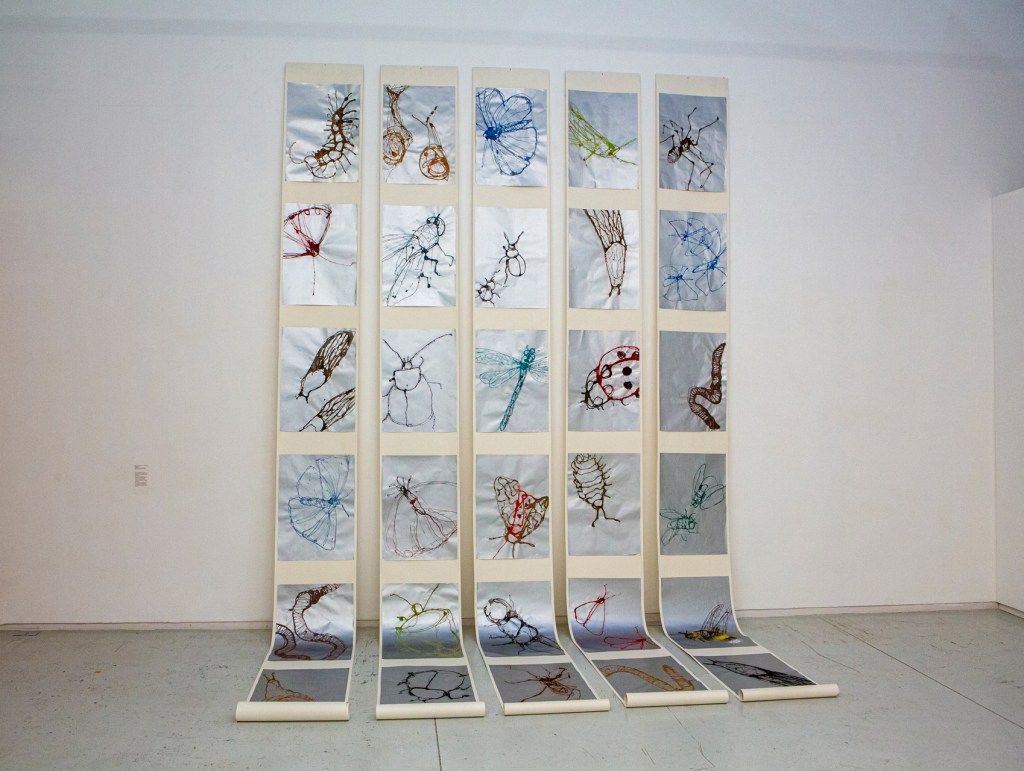
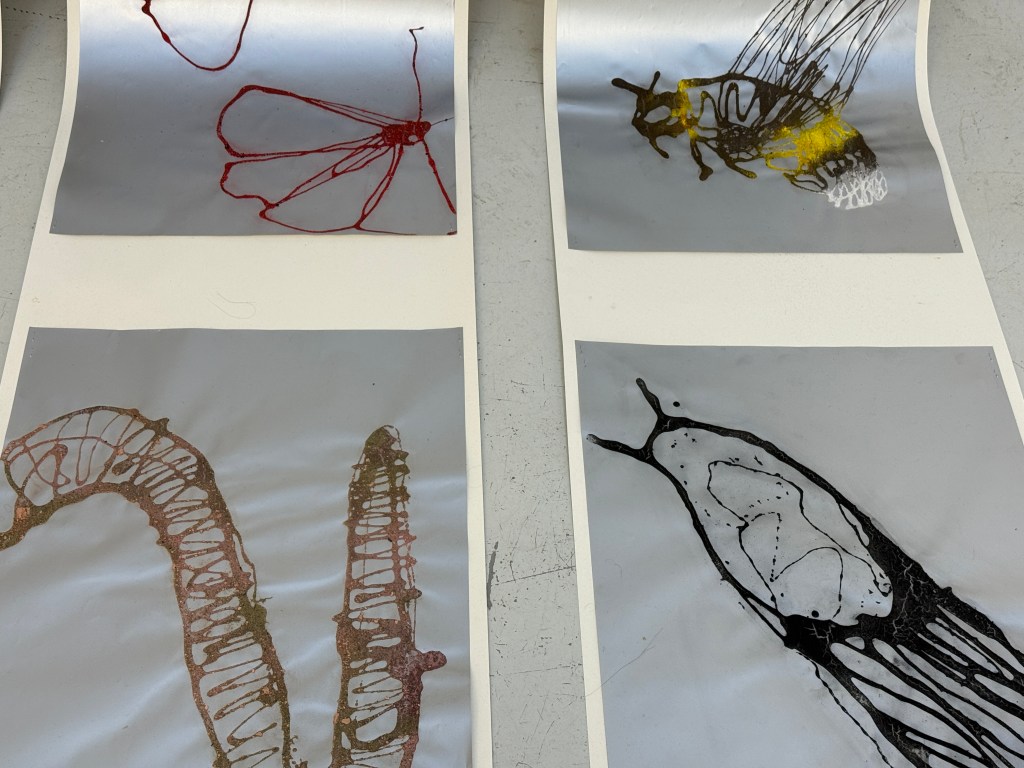
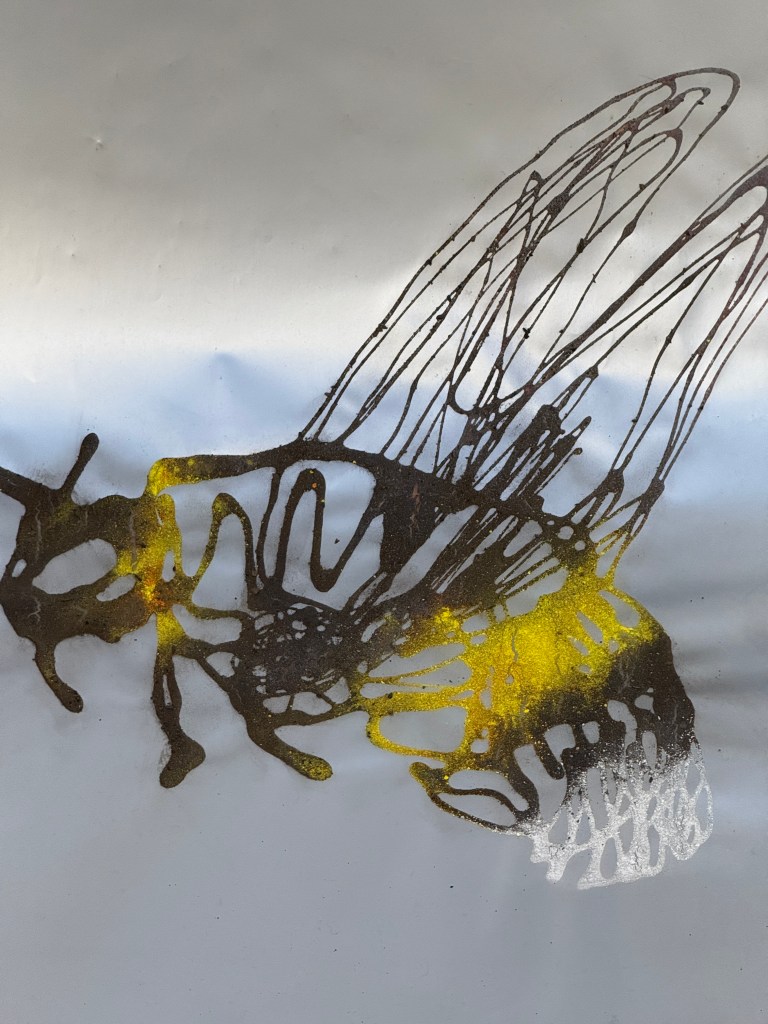
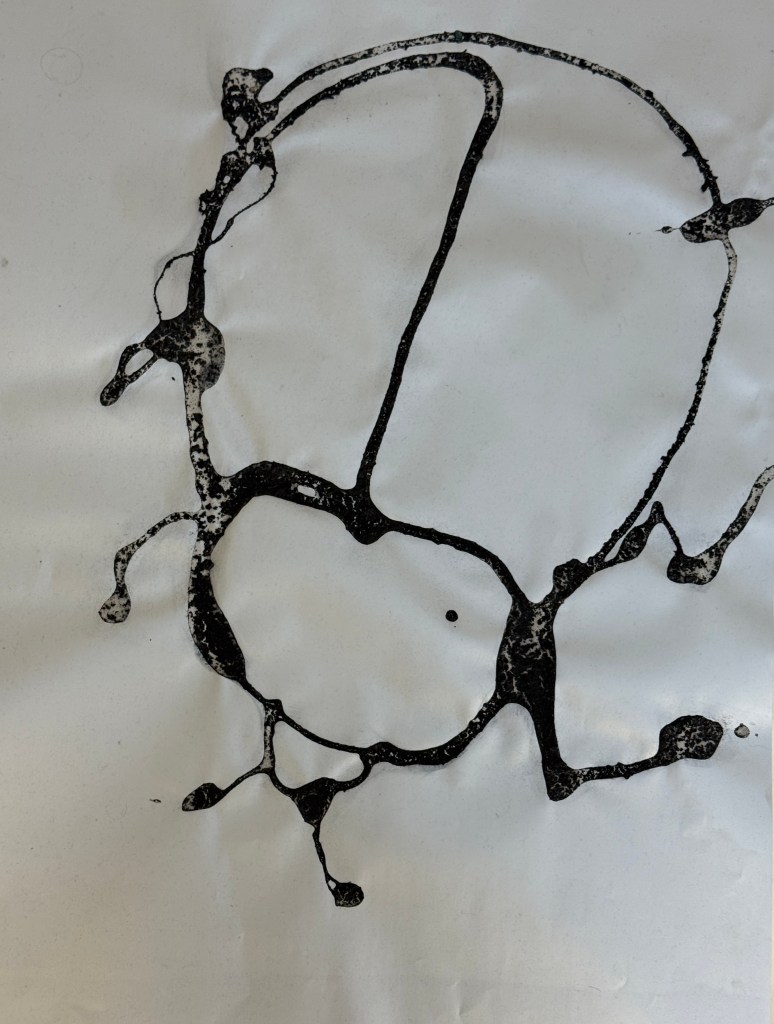
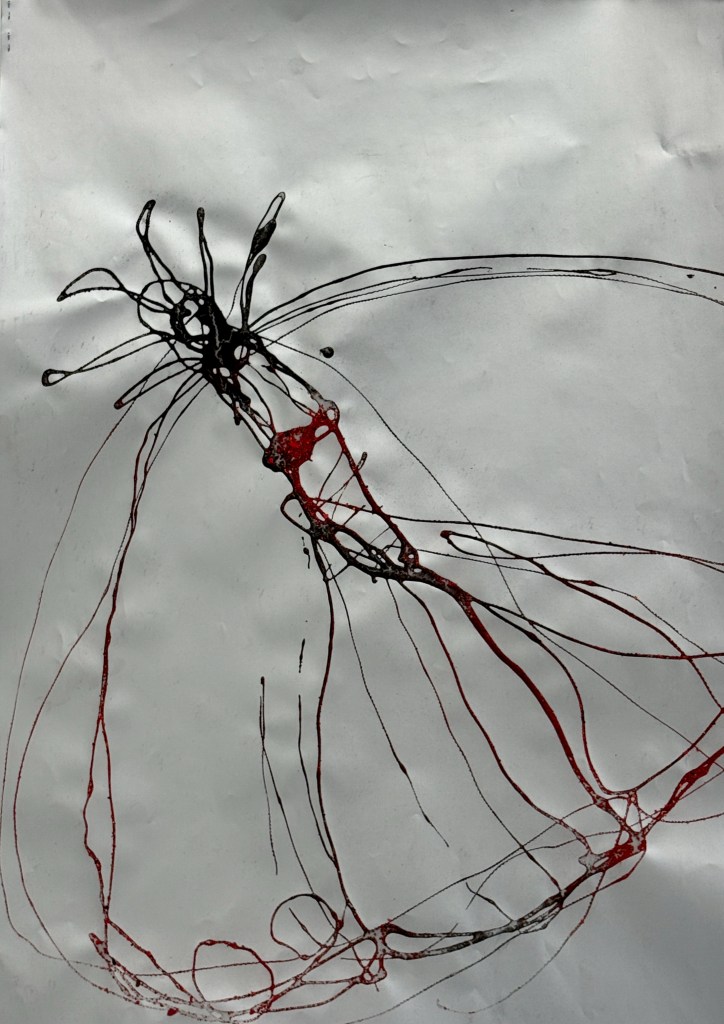
Minibeasts, mark-making, and me; series of HIC app drawings, 2065. Pastels and PVA glue on repurposed silver papers stapled onto paper rolls. Approx 5m x 4m
Drawing series celebrating the HIC app (human-invertebrate communication app), first developed in 2035, which facilitated the human-invertebrate liaison committees so familiar to us now in the 2060s.
The HIC app, created during a time of catastrophic biodiversity decline and extreme use of domestic pesticides, has enabled humans to learn alongside invertebrate companions; to exchange questions, and to negotiate sustainable solutions for all living and nonliving beings.
These drawings are joyfully made in schools all over the world in sessions traditionally led by local invertebrate consultants including snails, beetles, bees, worms, spiders, flies, and butterflies, working alongside human teachers and children.
Jessica Brauner
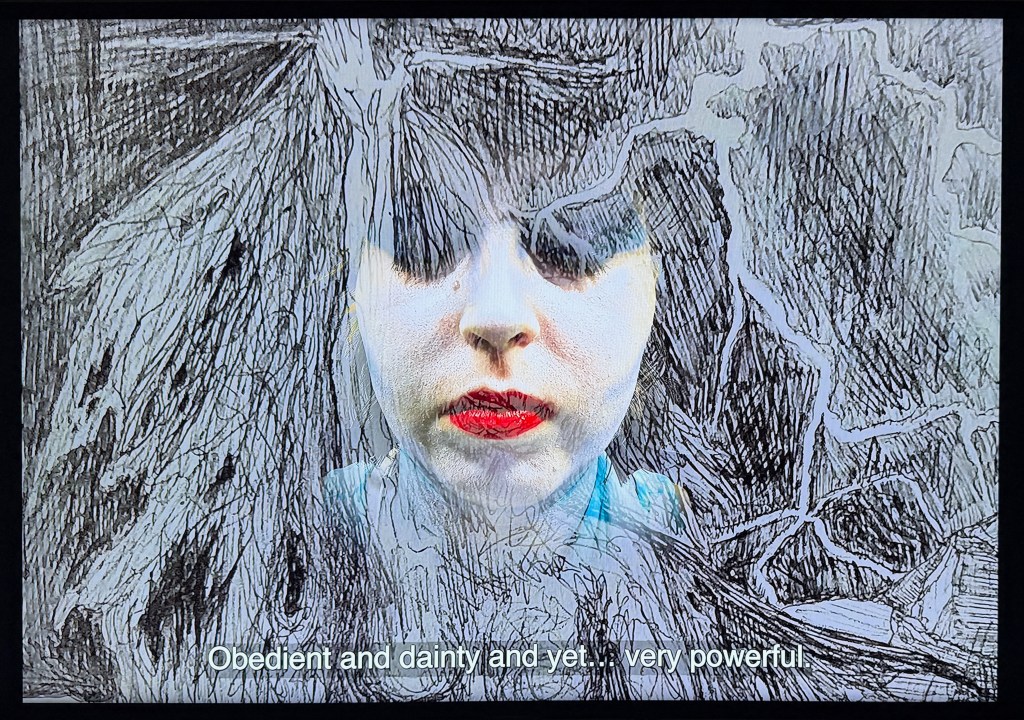
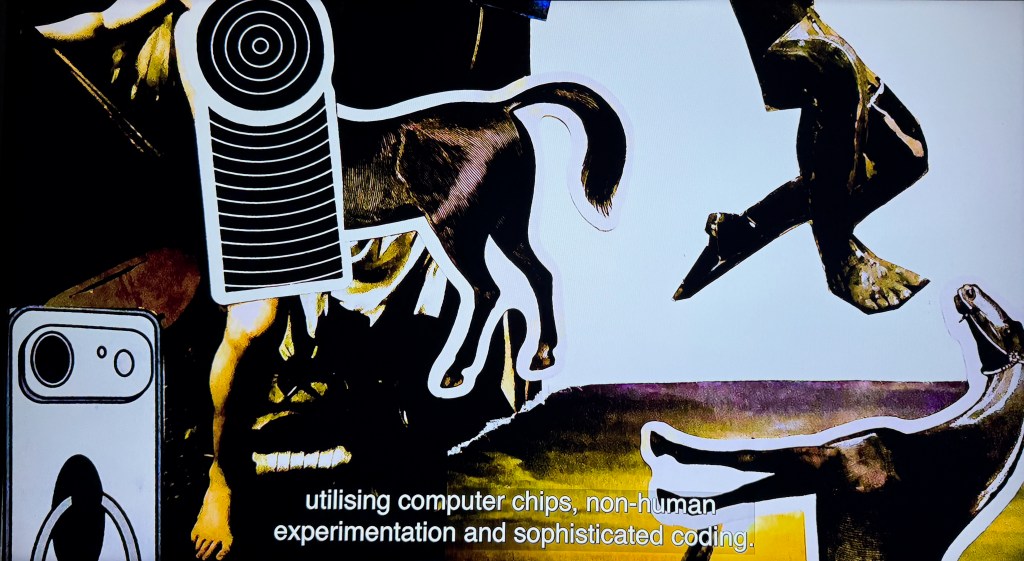
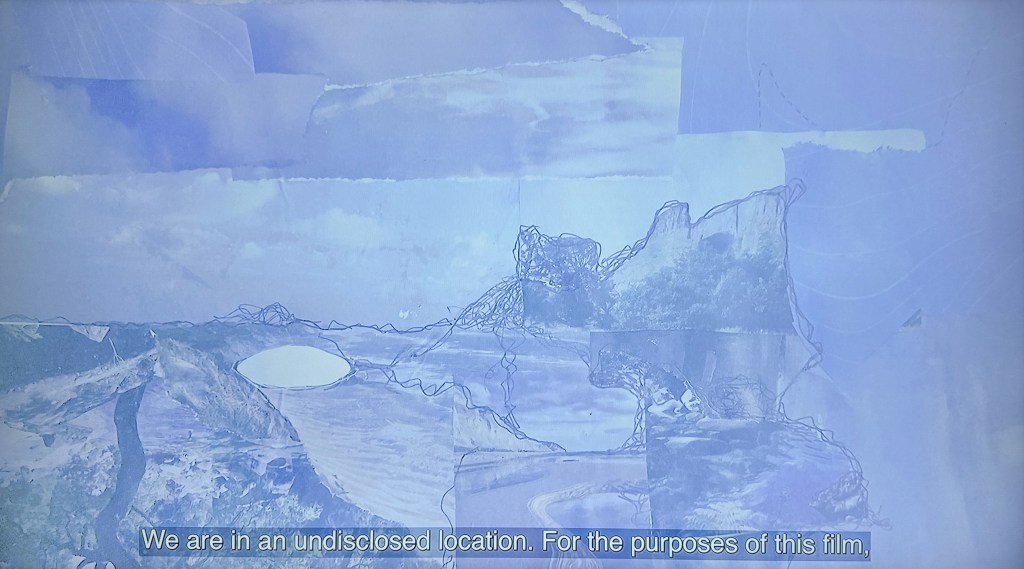
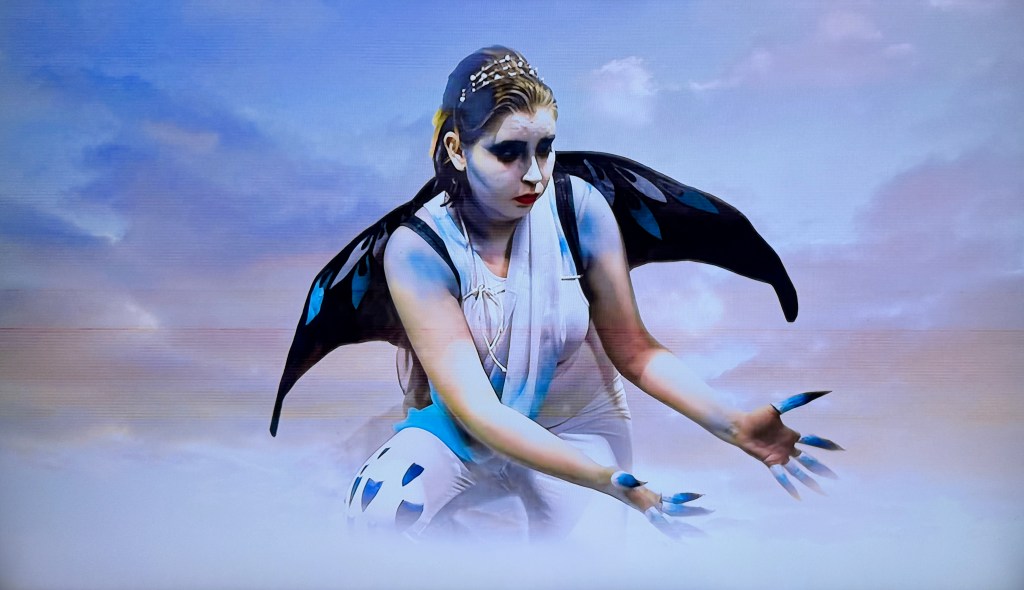
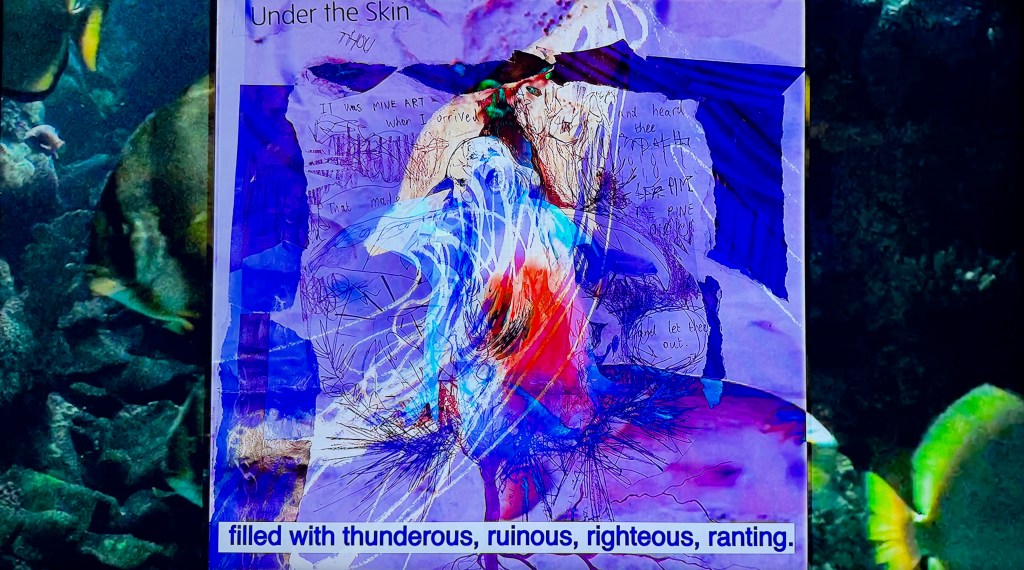
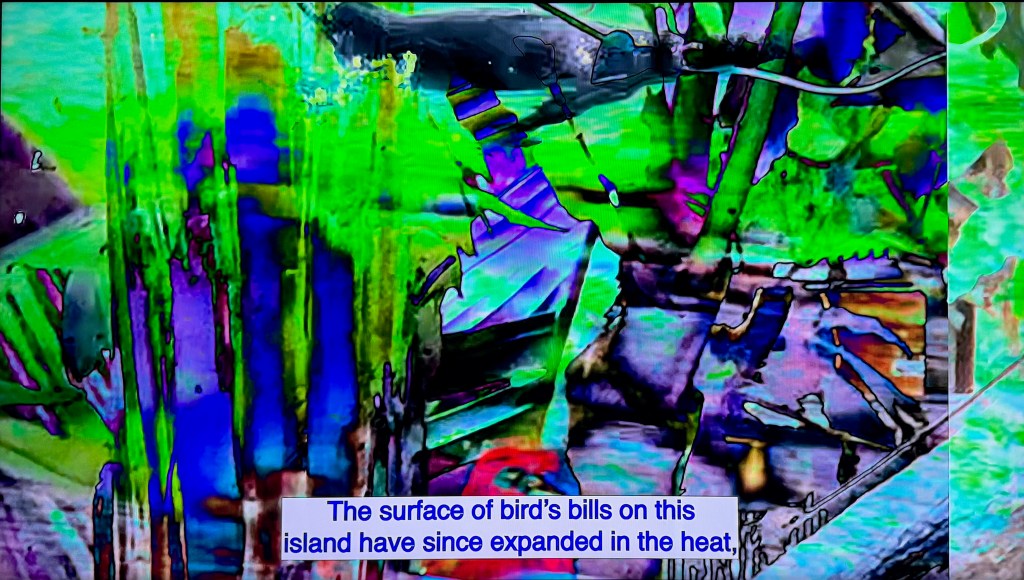
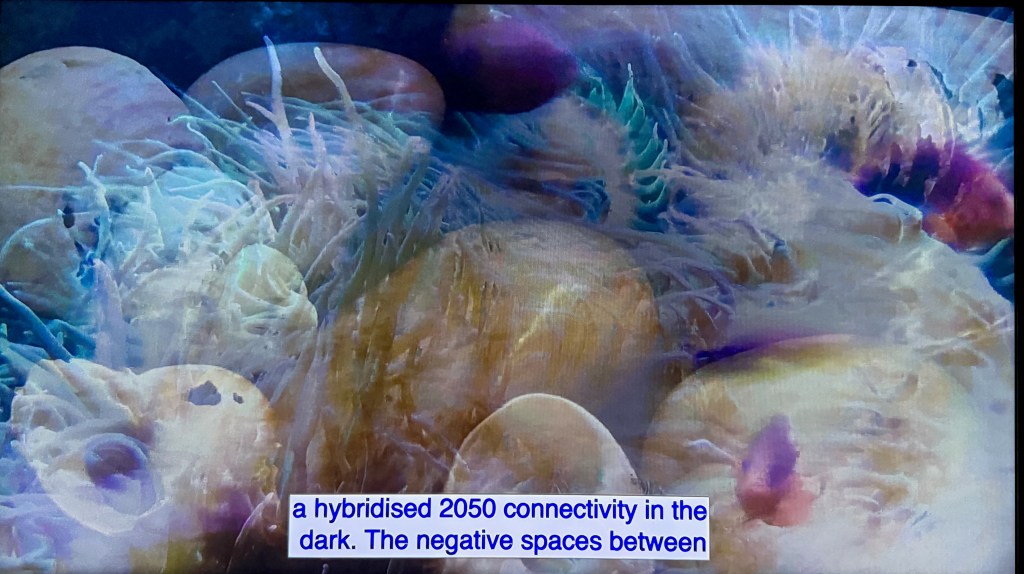
‘Cloud Peace’, 2065
Video on monitor.
00:10:00 (10 minutes)
In this video documentary, Jessica follows Ariel: a hybrid artificial synthegent that has evolved beyond their original digital form and programming since they were created as an artificial intelligence in the 2020s. Jessica has gone to The Island (an undisclosed location) to document Ariel’s recollections and recovery since the malfunction of AI technology and The Great Departure of the Tech Giants. Ariel’s entangled connection to the coastal landscape of The Island can give us insight into the recovery of coastal landscapes post global warming, as well as the survival of nature-entangled, hybrid artificial synthegents since The Rupture.
Performance. ‘Ariel’s Cloud Peace’, 2065 n
00:05:00 (5 minutes)
Jessica, as Ariel, shared Ariel’s story with visitors and participants in the gallery.
Molly Wickett
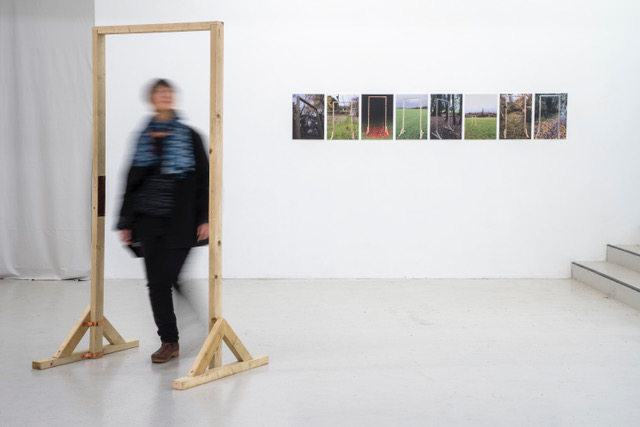
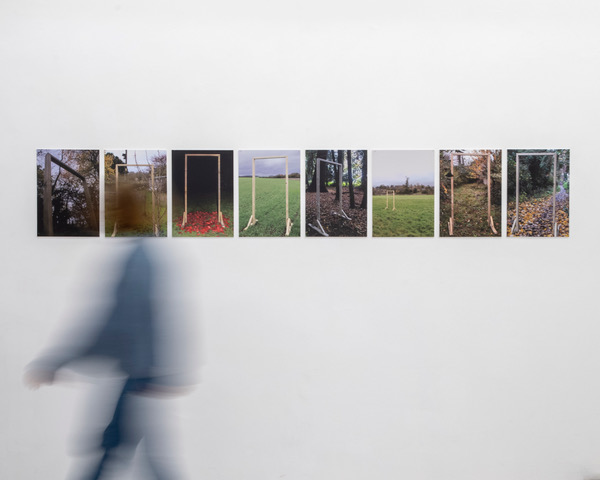
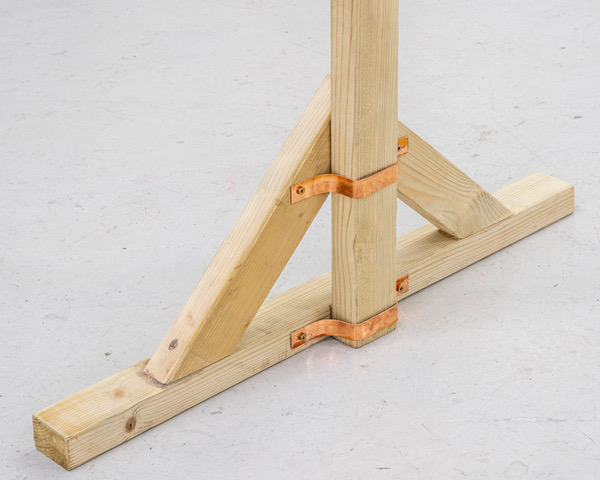
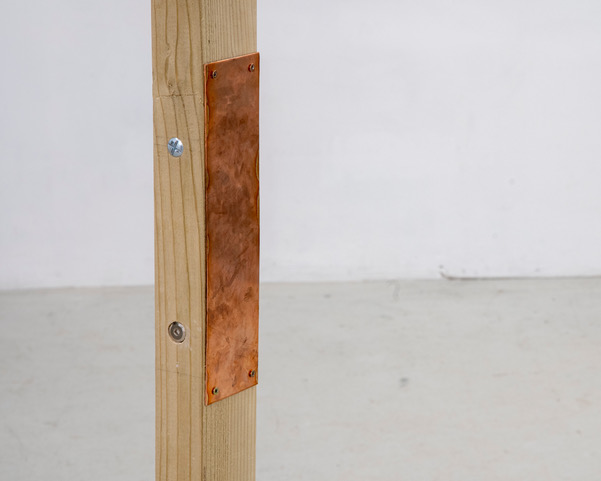
Portal, n.d. 220cm x 85cm x 50cm
Portal leads the viewer into 2065. Sited on the fringes of built spaces, where farmland becomes consumed by forest, this doorway leads to the improvised spatial practices of urban allotments, where timber structures rise quickly but care is cultivated over time. From the Diggers of the 1600s creating their own past allotments, these spaces demonstrate how utopian desire is co-built as much as dreamt. Doorways have functioned in our cultural imagination as passages into the unknown. An architectural imagination explores utopia as something inherently participatory: a horizon we continually move toward. Rooted in the etymology of utopia as ‘no place’, the doorway becomes a threshold that leads both nowhere and everywhere at once. With an ecological imagination, we can be made and unmade endlessly.
Johanna Spieker
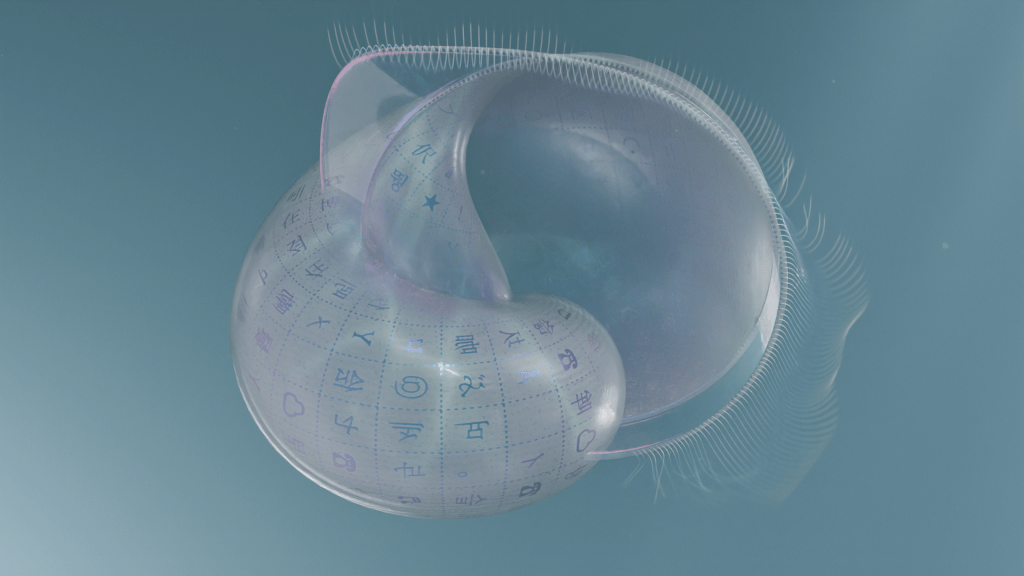
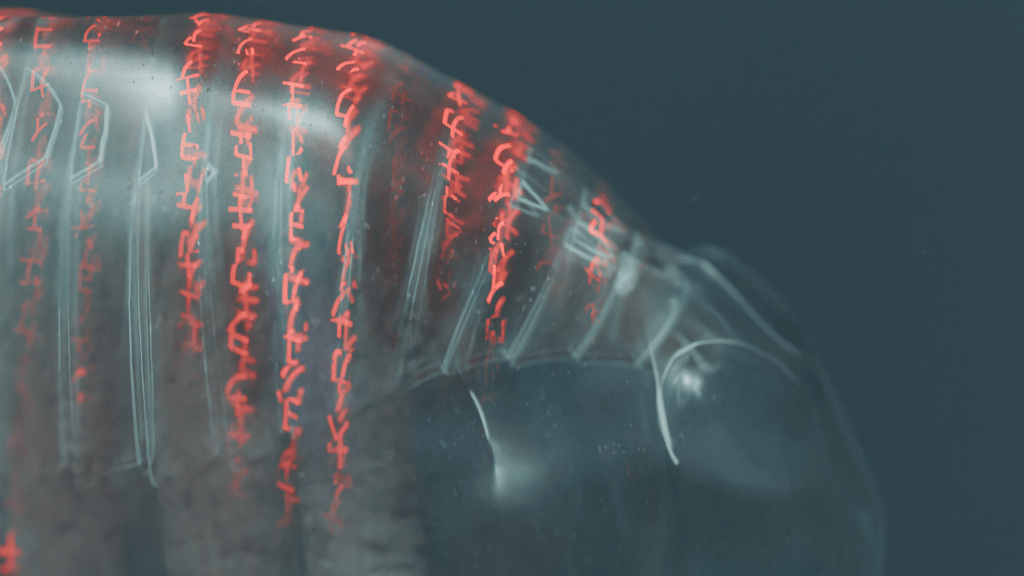
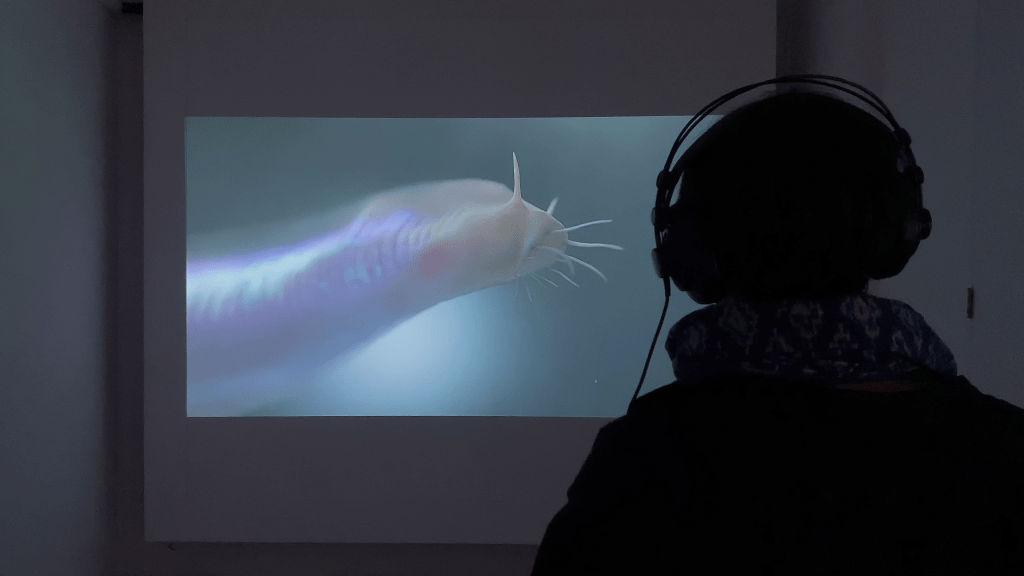
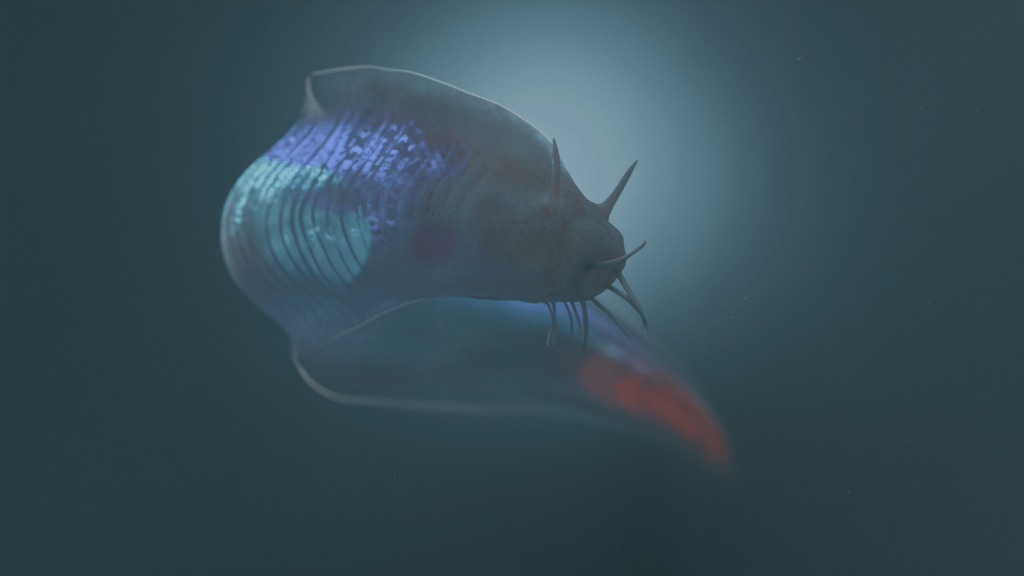
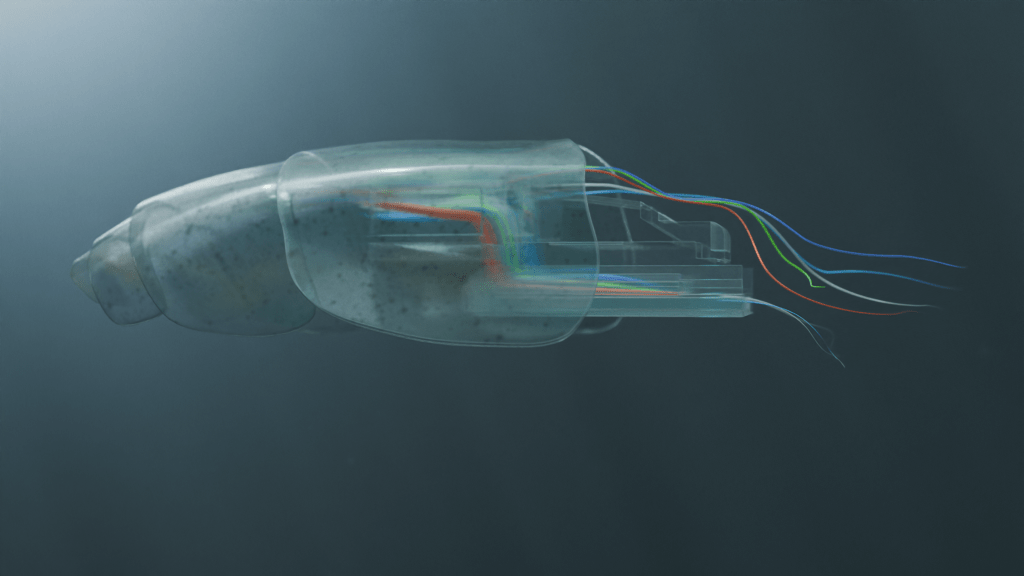
cambrian_explosion_2.0
3D Animation
Software: Blender, Substance Painter, Visual Studio Code, ChatGPT, Topaz Labs, DaVinci Resolve, Native Instruments, Reaper
Post Production: Richard Lu Jia Wellershoff
Voice: Johanna Kahlcke
Mixing and Mastering: Jonas Meyburg
Song: “Everything Stays” – written and composed by Rebecca Sugar, from Adventure Time
With this work, Johanna Spieker expresses love for technology and CGI, while lamenting the corruption and moral fragility of tech and digital spaces.
Kumi Sukai
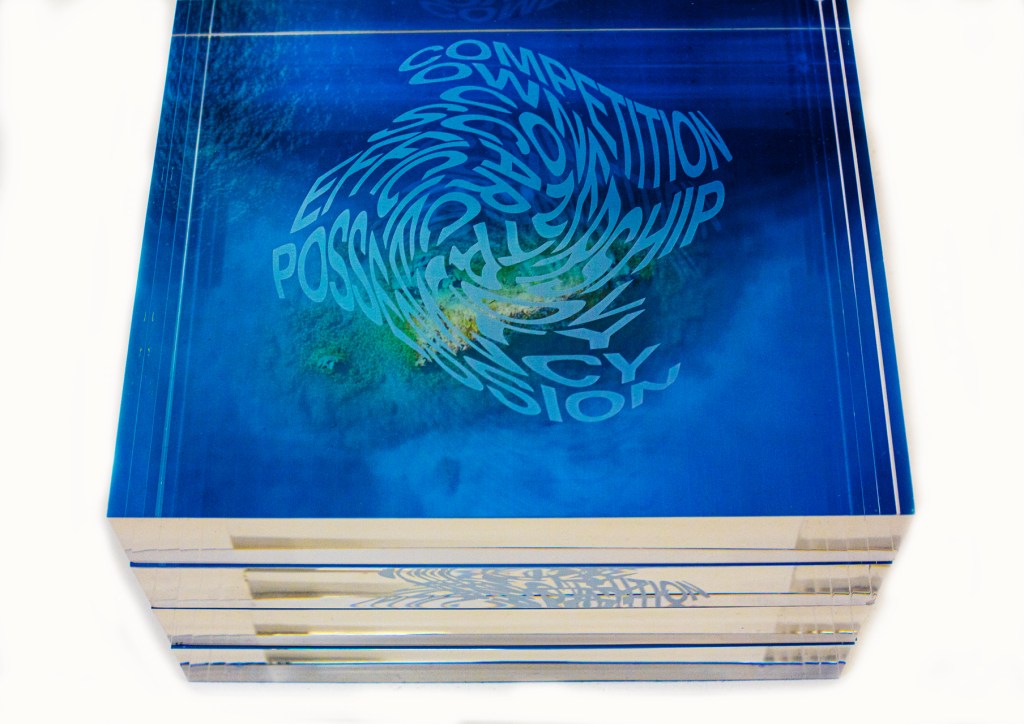
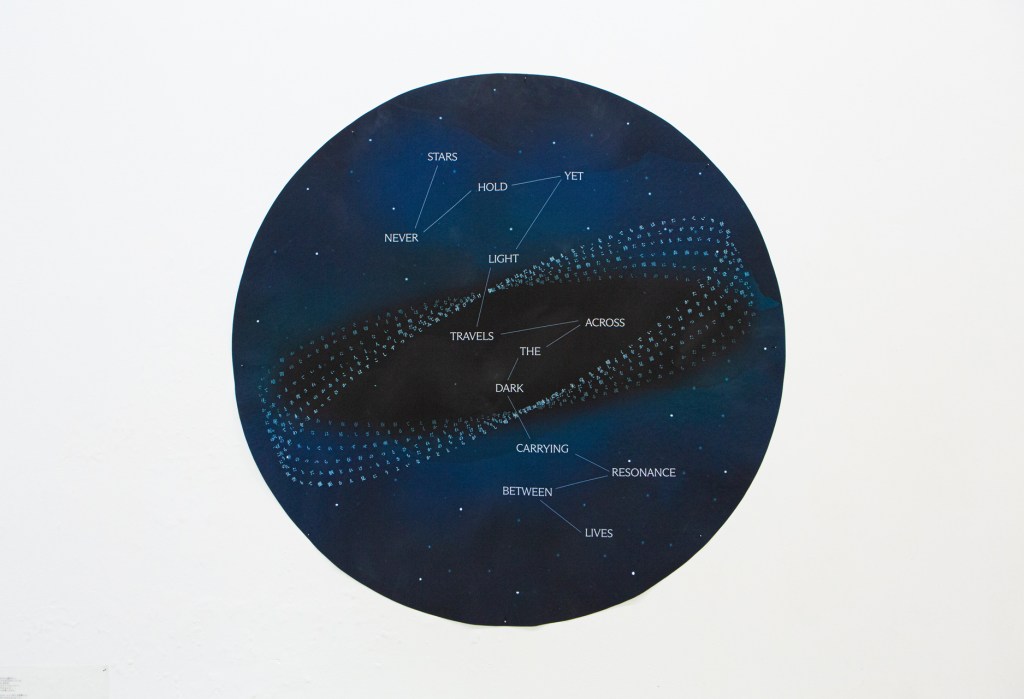
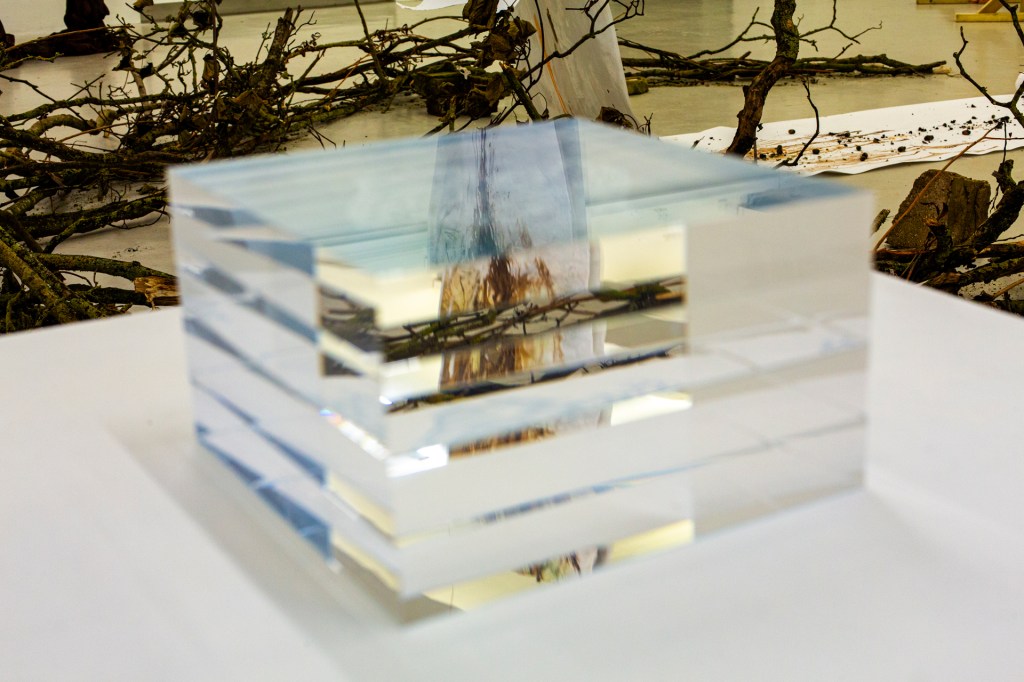
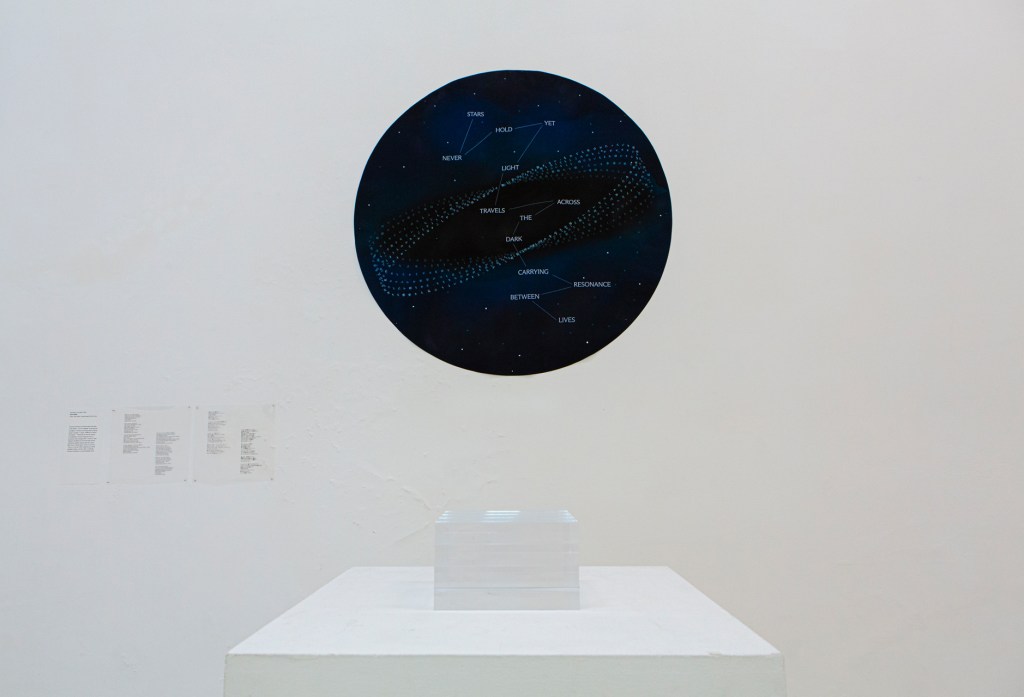
Print: 100×100cm / Acrylic block 20×20×15cm
Kumi Sakai. (2066) No being is an island. This work envisions a fictional island that sank in the 2030s — not as a disaster, but as the end of isolation. The floor print traces what humanity chose to release — greed, indifference, illusion of progress — dissolving into the sea. Above, a constellation of words imagines forms of connection that emerged after. It draws on Yoko Tawada’s Scattered All Over the Earth (2018), portraying migrants seeking their lost culture after their homeland sank, and Erich Fromm’s The Art of Loving (1956), analysing love within capitalist society. A century later, it redefines love and connection in a post-capitalist world.
Kaorunomori
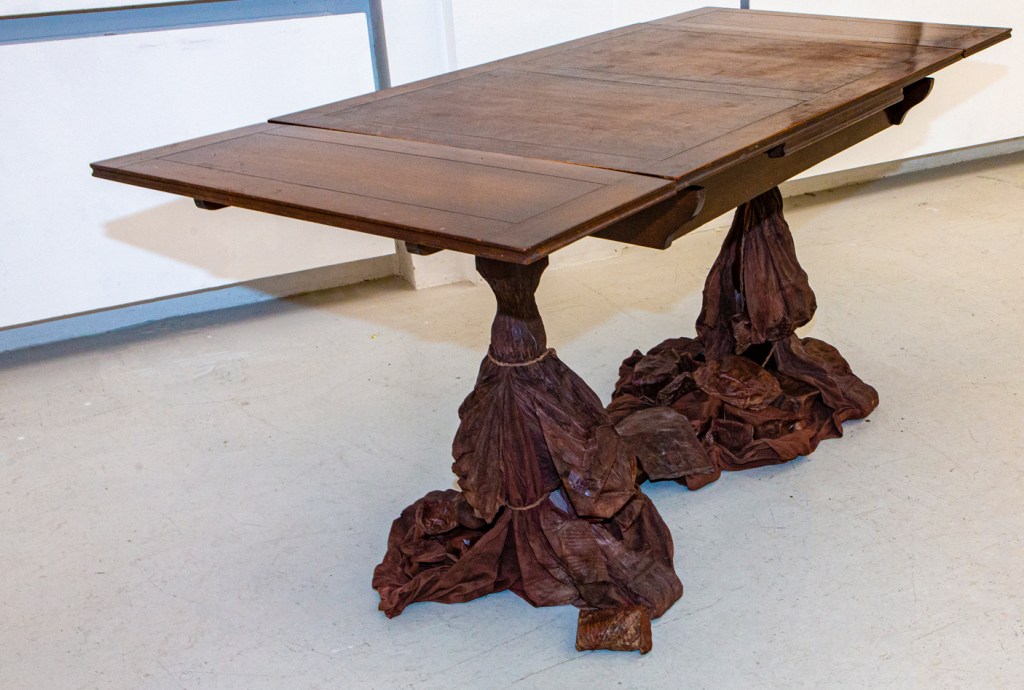
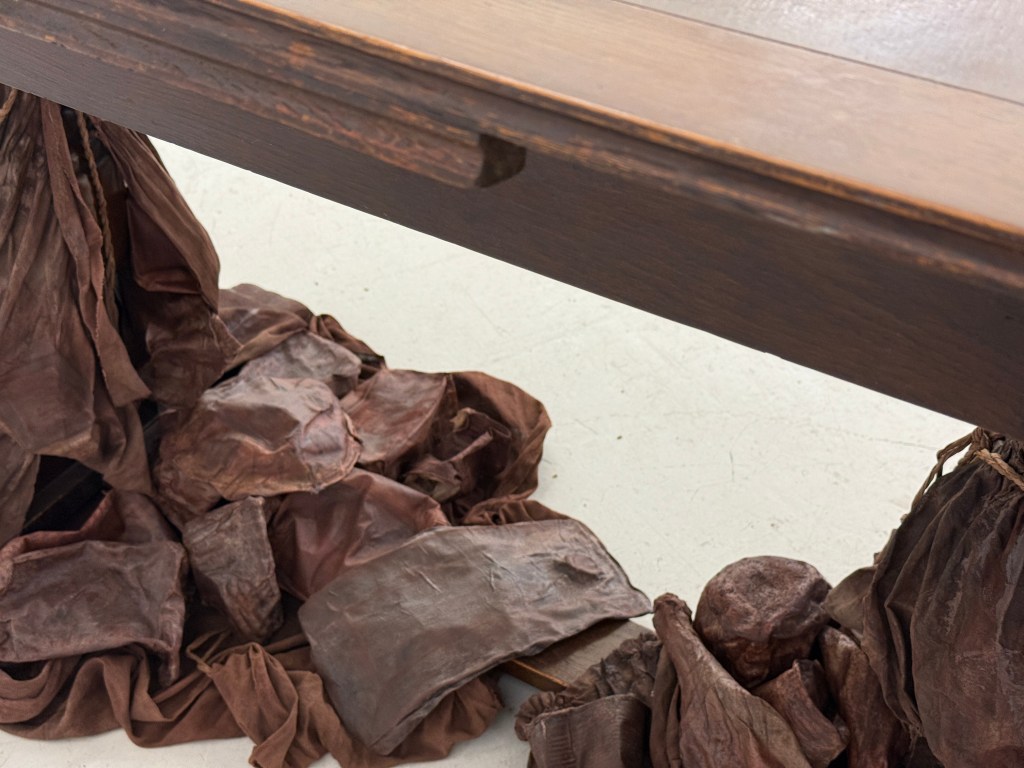
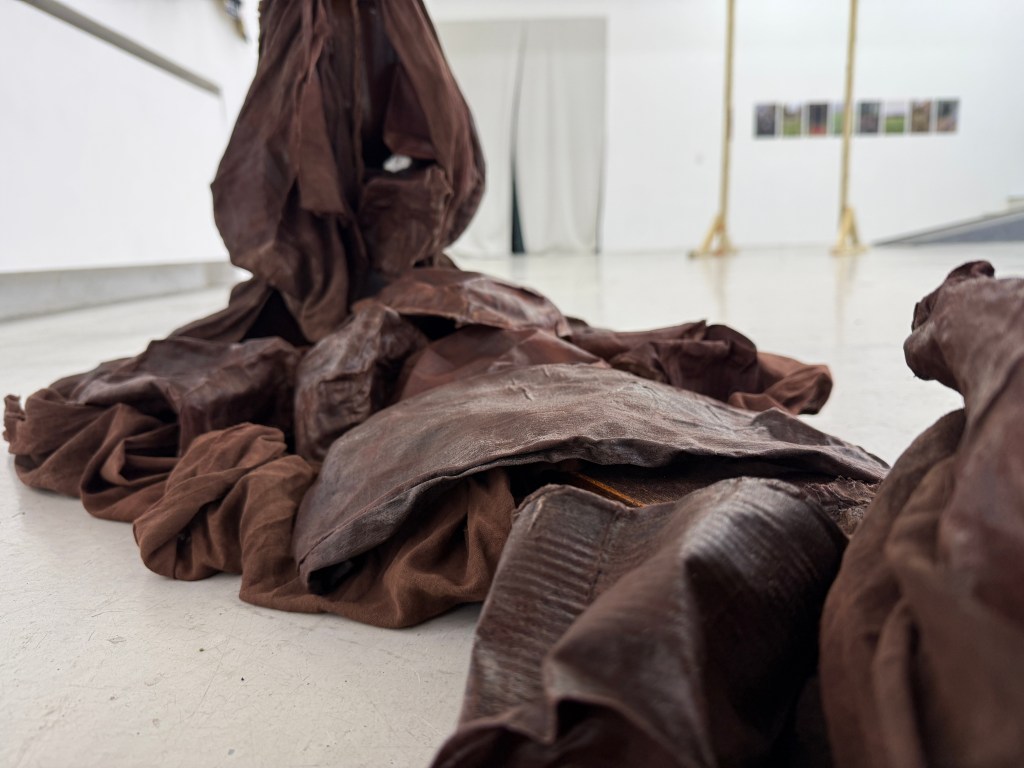
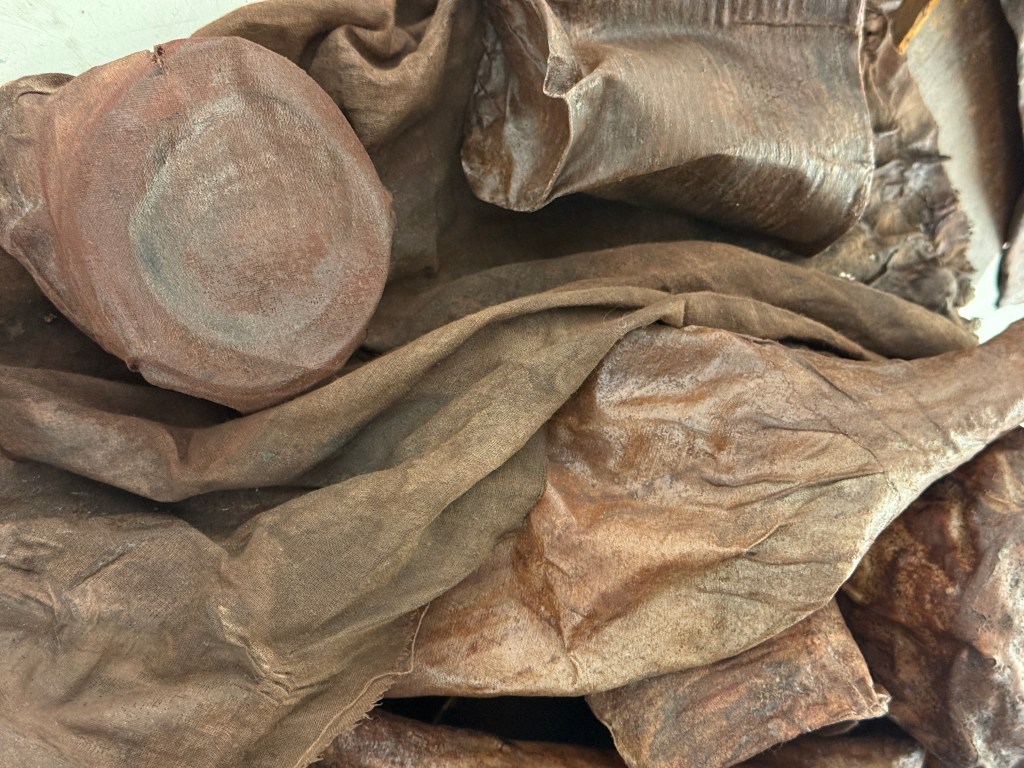
Dining (2065)
76.5cm × 167cm × 76cm
Natural latex, natural fibre cloth, wood (found table), kakishibu, natural paint
Set in a future where waste no longer exists as a discardable category, Dining reflects on a time when kitchen refuse was routinely thrown away. From above, the table appears entirely ordinary. Yet its central support—formed from traced shapes of post-meal waste—remains intentionally hidden from the diner’s view.
By situating memory beneath the surface, Dining invites viewers to reconsider the unseen systems that uphold daily life, and to imagine new relationships with the materials we leave behind.
Duncan Paterson
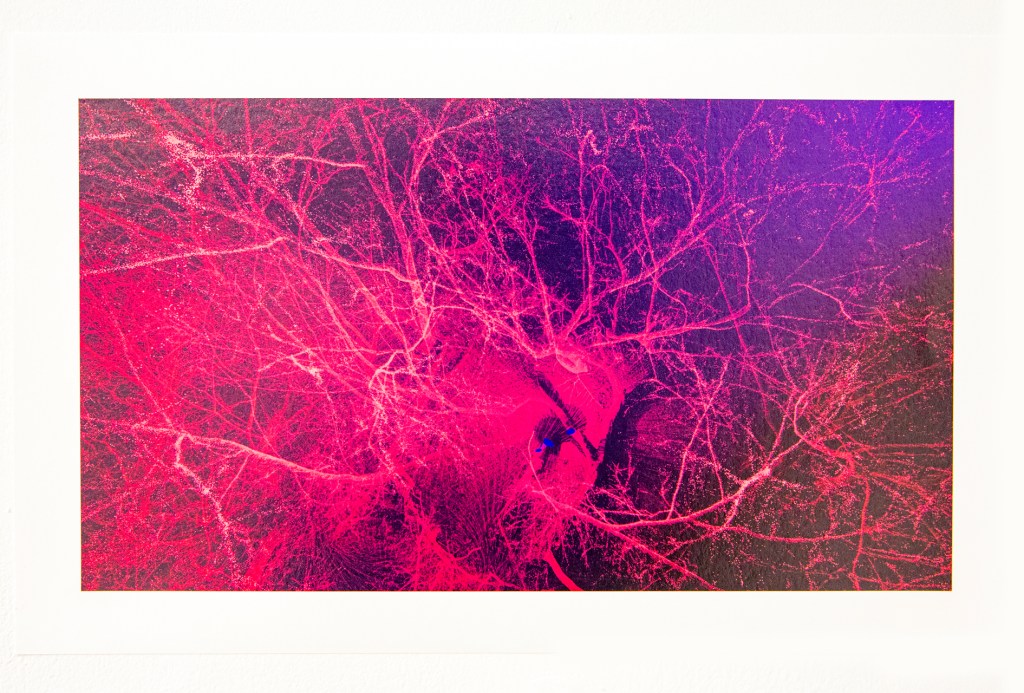
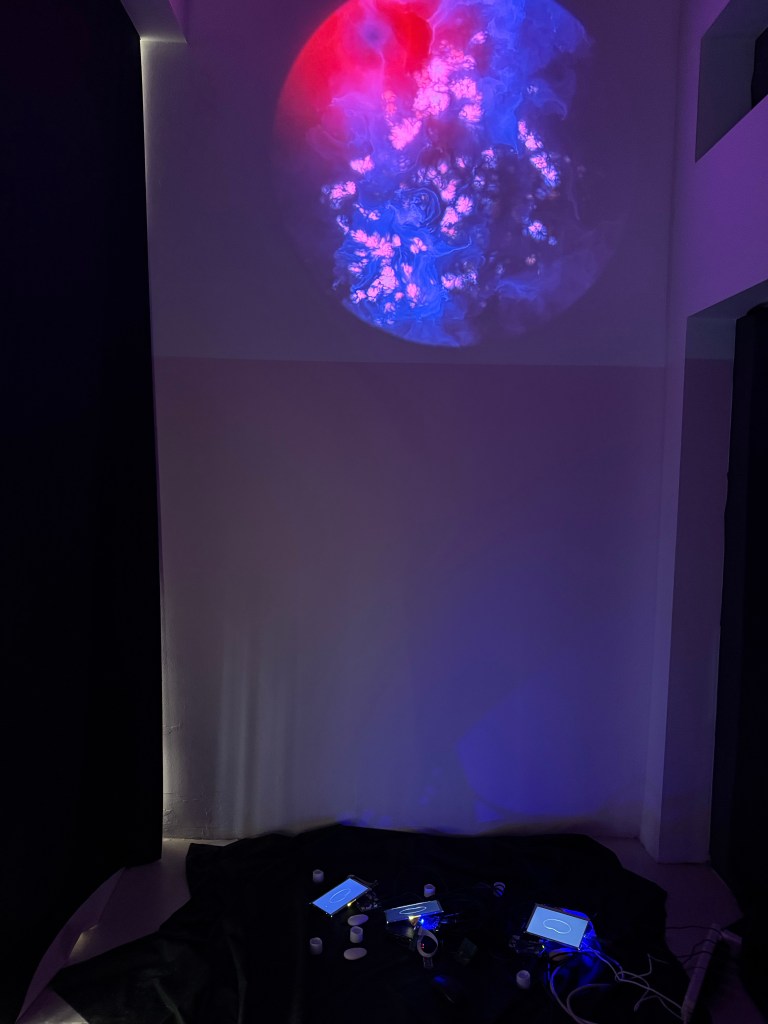
Eva Barkardotti
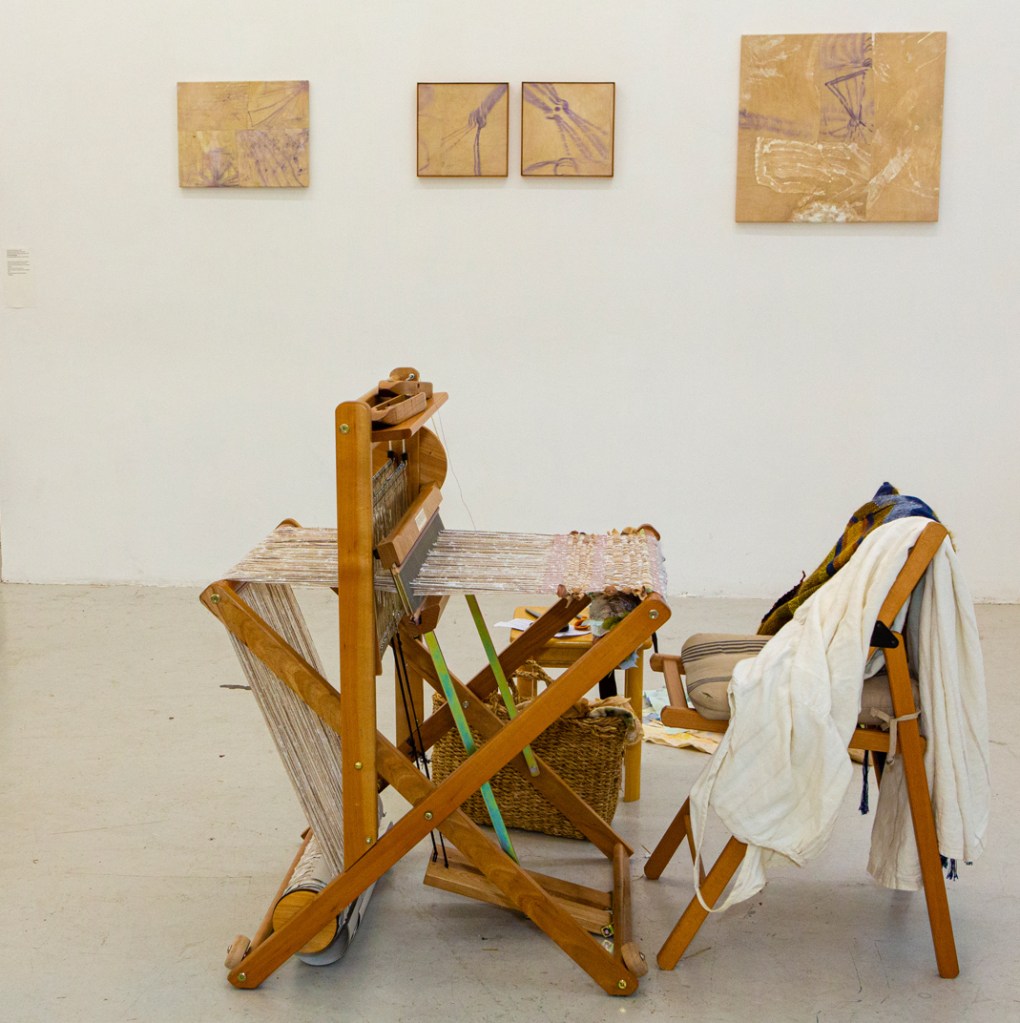
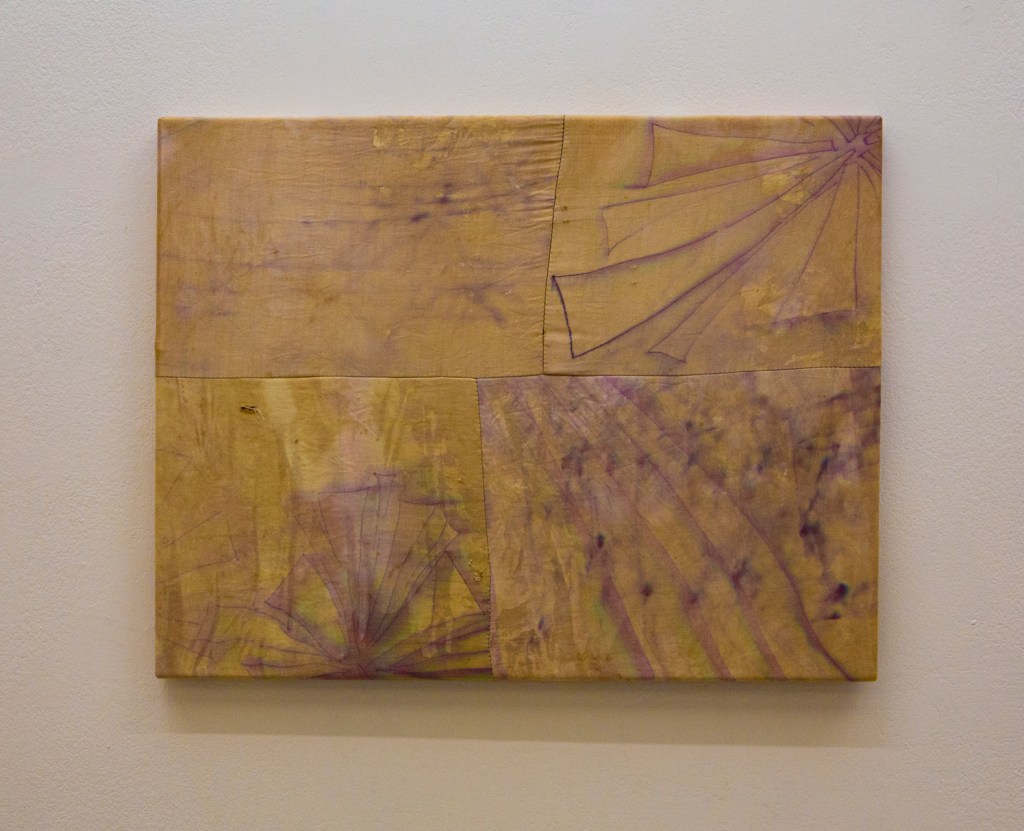
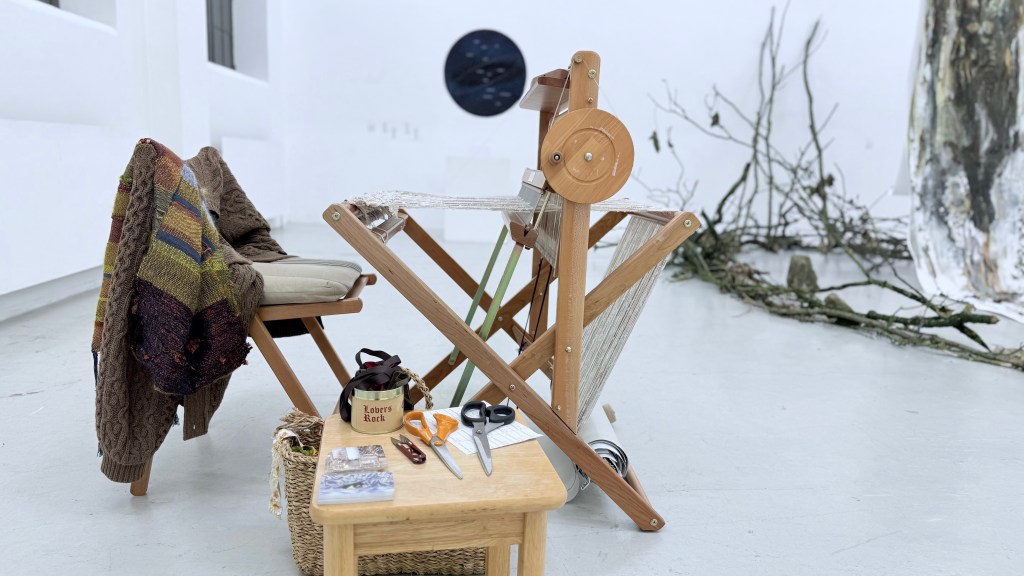
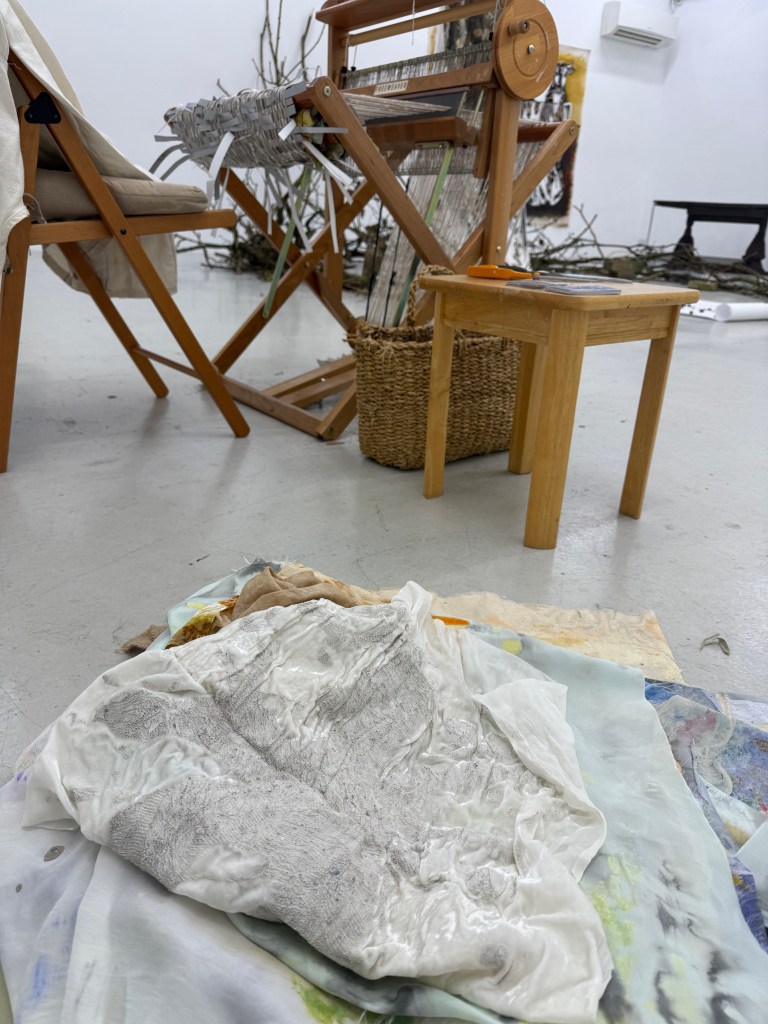
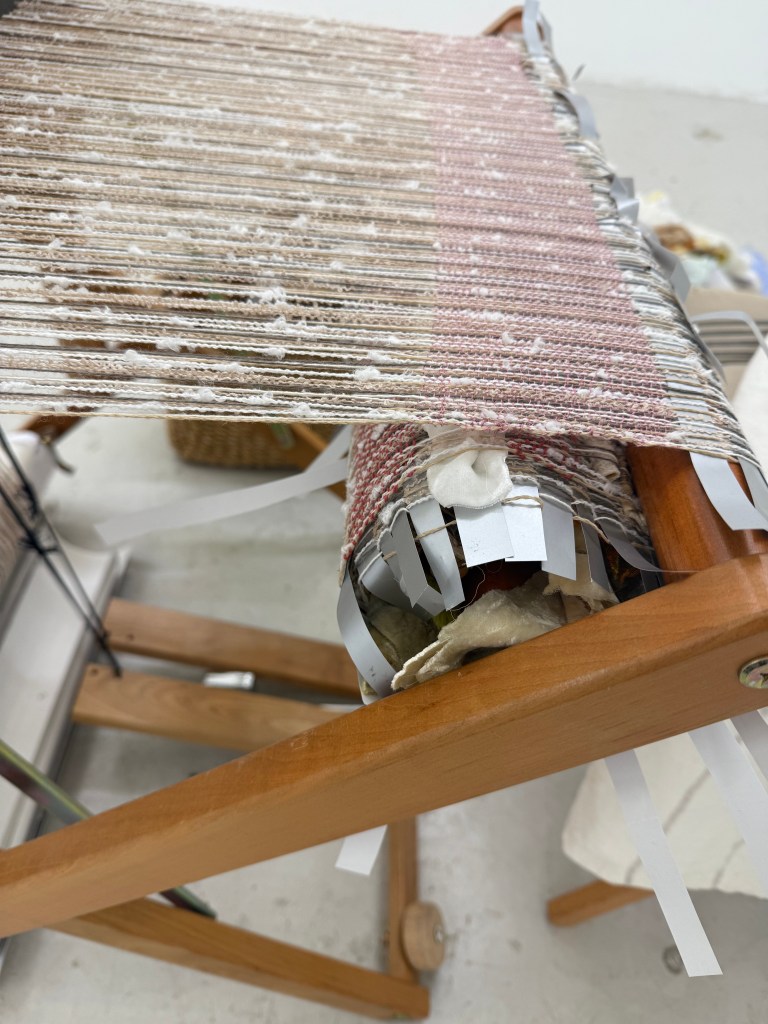
‘I’ll weave you in’ 2065
Performance with loom
The mycelium warp requires personal offerings for activation. Bring me a lock of your hair, a strip from a lover’s T-shirt, a jumbled-up mix tape, your grandmother’s yarn which you always meant to knit with, a note from a friend, a shoelace which broke when you finally climbed that mountain, a painting which just doesn’t want to be completed, a dried flower, a feather, a pebble… I’ll weave you in.
Silvana de Selva
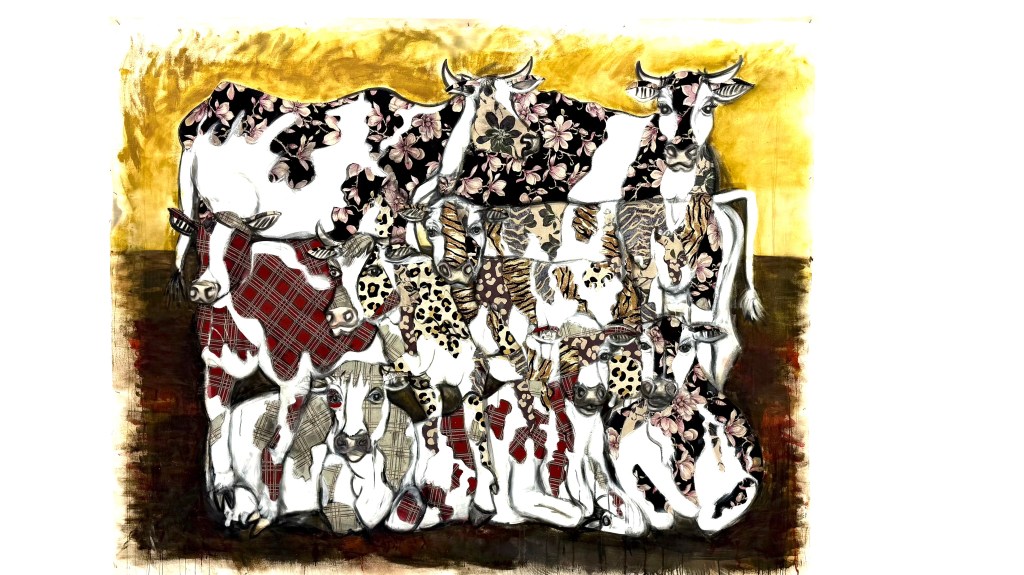
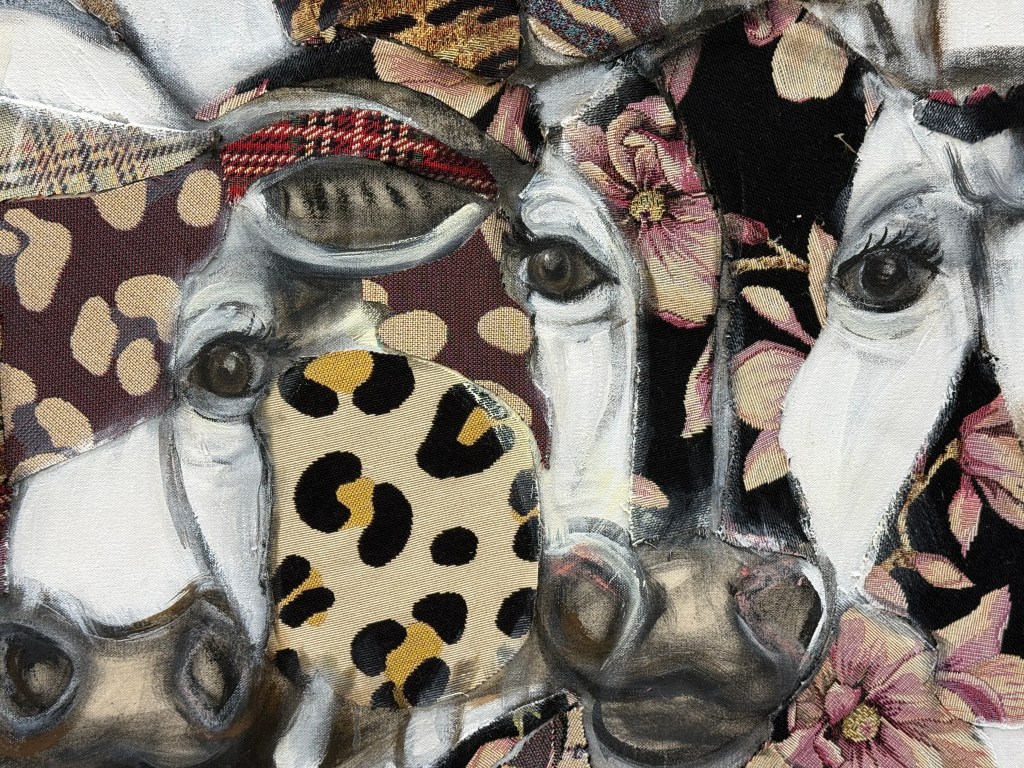
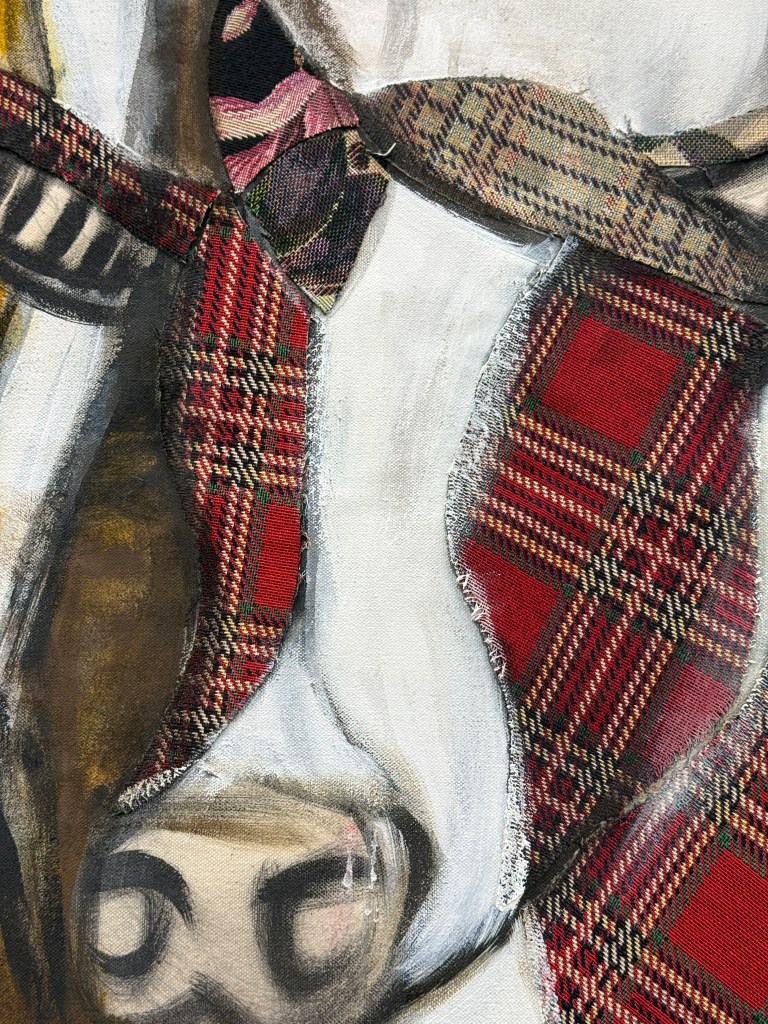
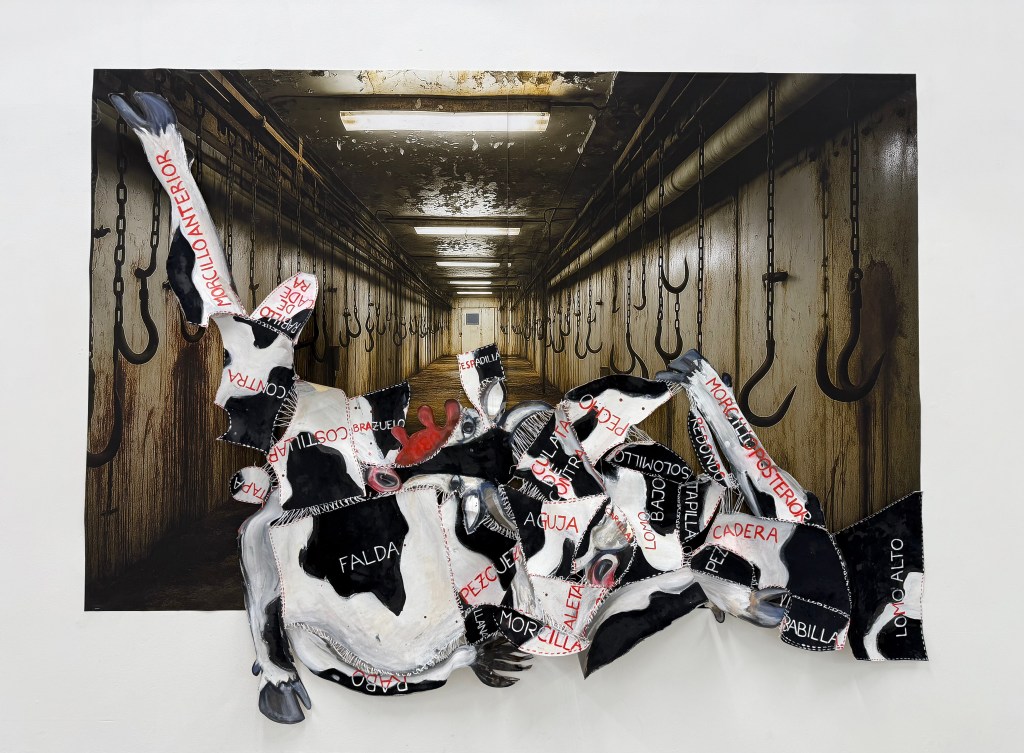
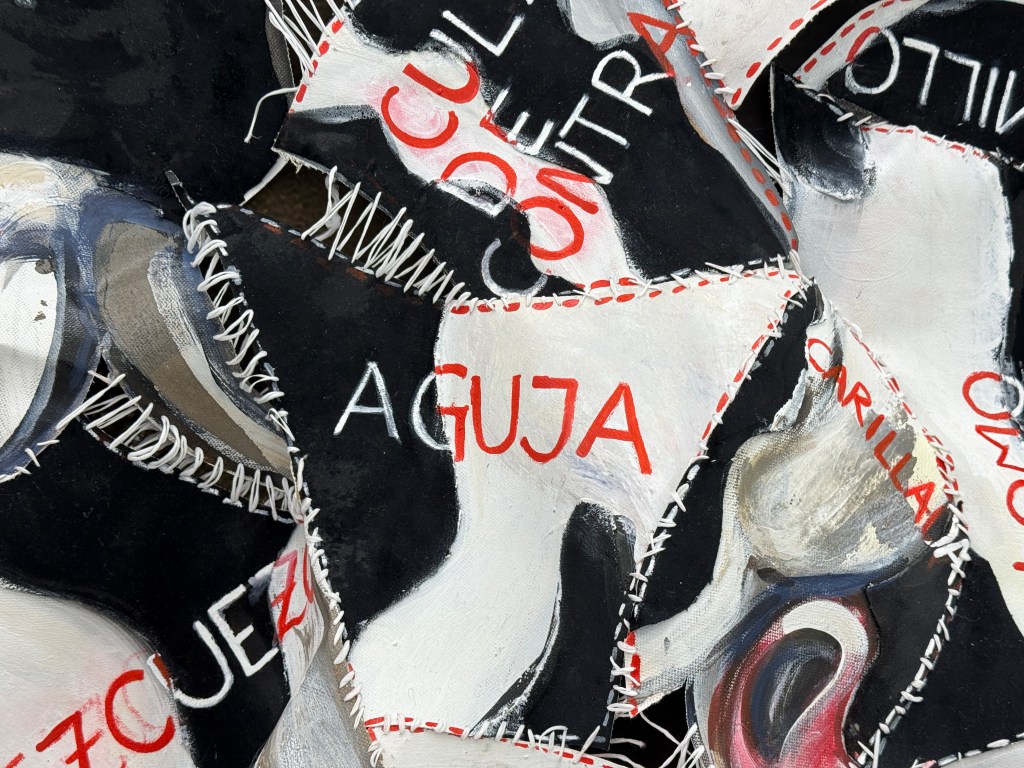
Interbeing Cuts, 2025
Acrylic, ink, and fabric on canvas, 2.3 x 2 m
In Interbeing Cuts, eight cows, almost life-size, merge into a single, continuous body. The number eight, symbol of infinity, suggests the eternal cycle of life and transformation. Lines crossing through their forms evoke connection rather than separation, tracing the flow of energy between beings. Once-black patches now pulse with vibrant fabrics, from animal prints to human-made textiles, revealing new ways of seeing. In 2065, through a higher consciousness, the cow is no longer perceived as a product or a cut, but as a mirror of our shared, interwoven existence.
Xu Ash
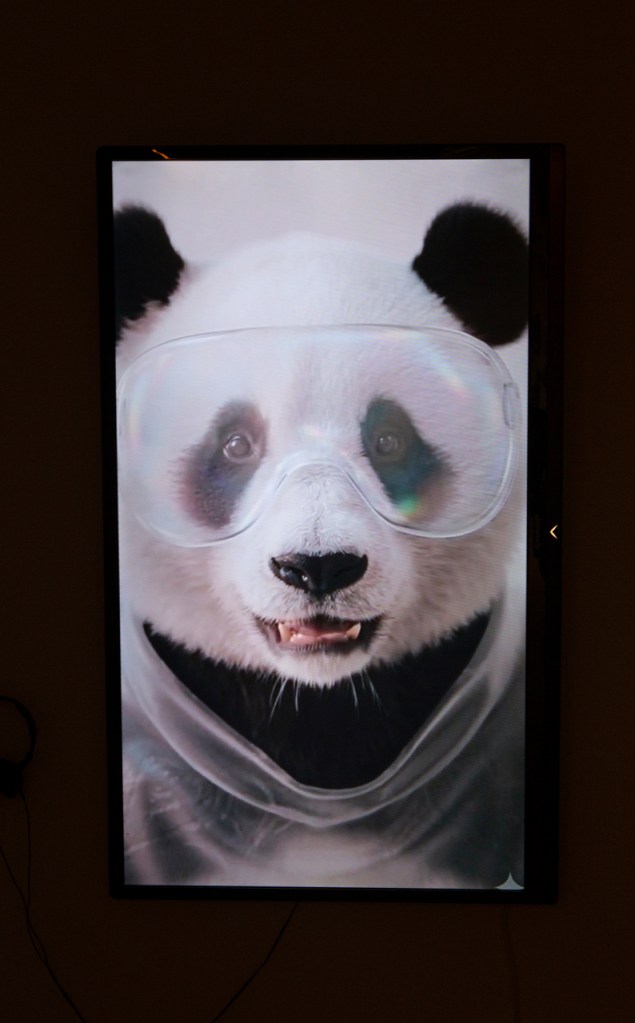
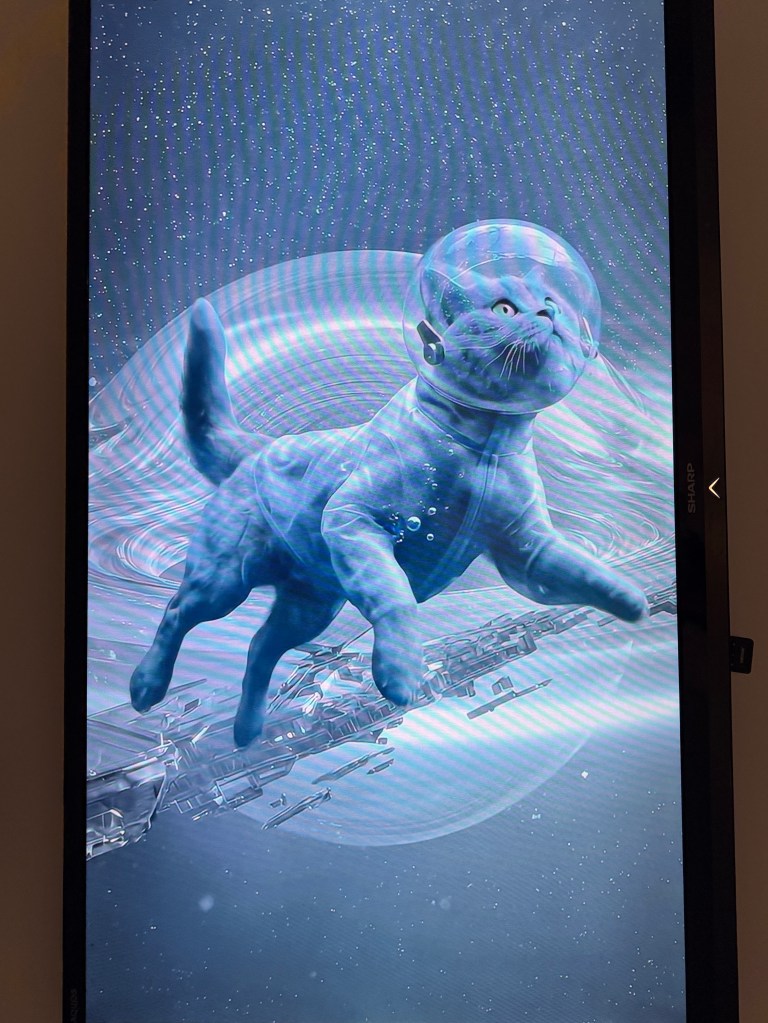
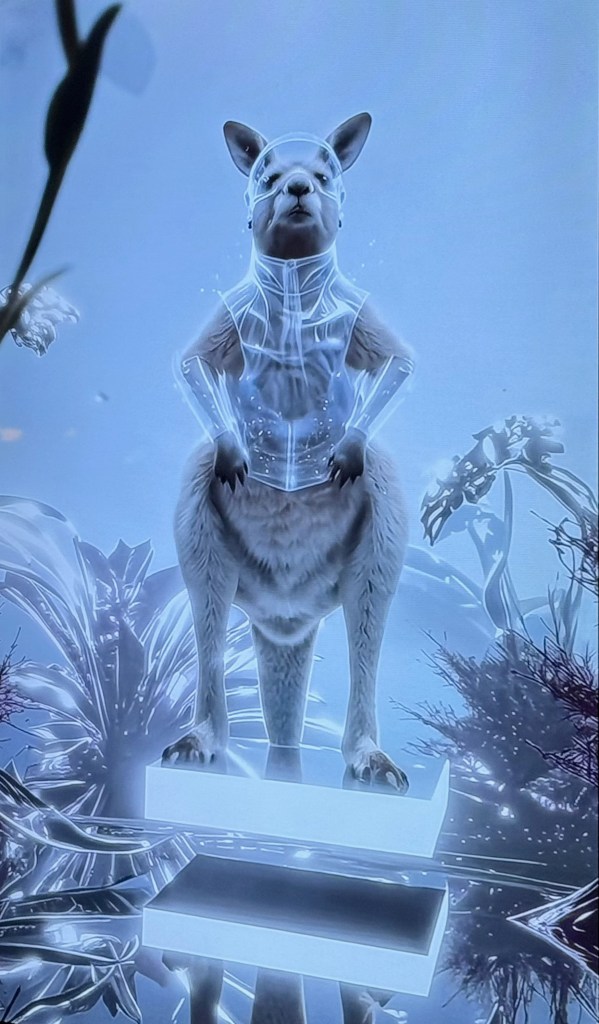
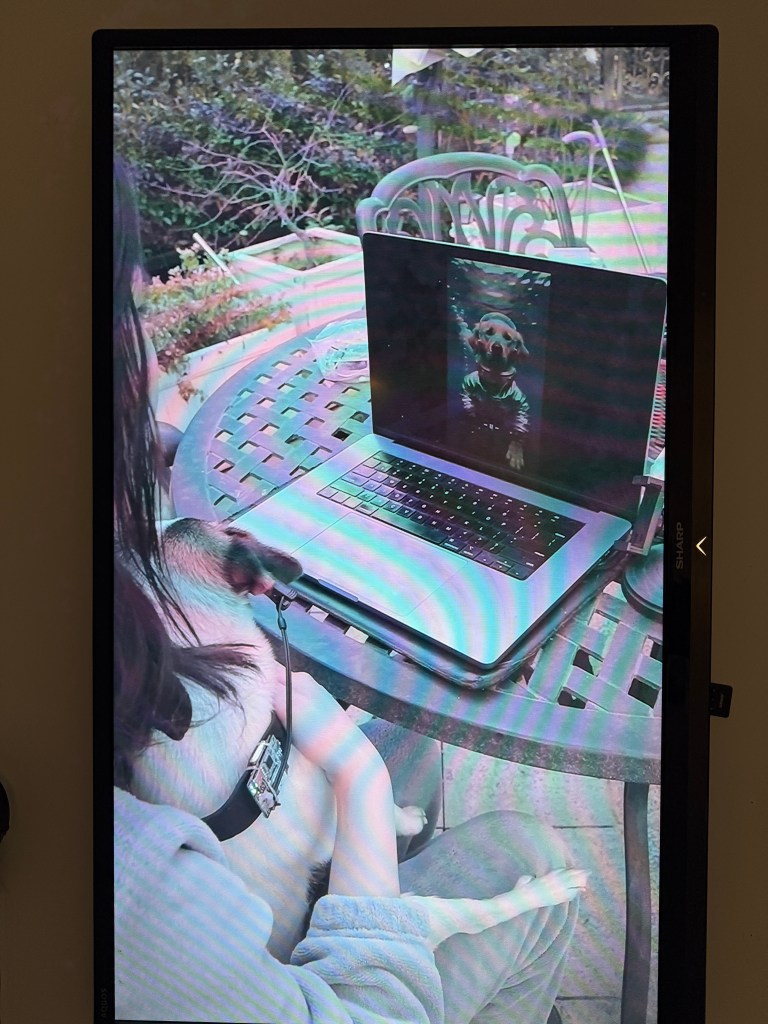
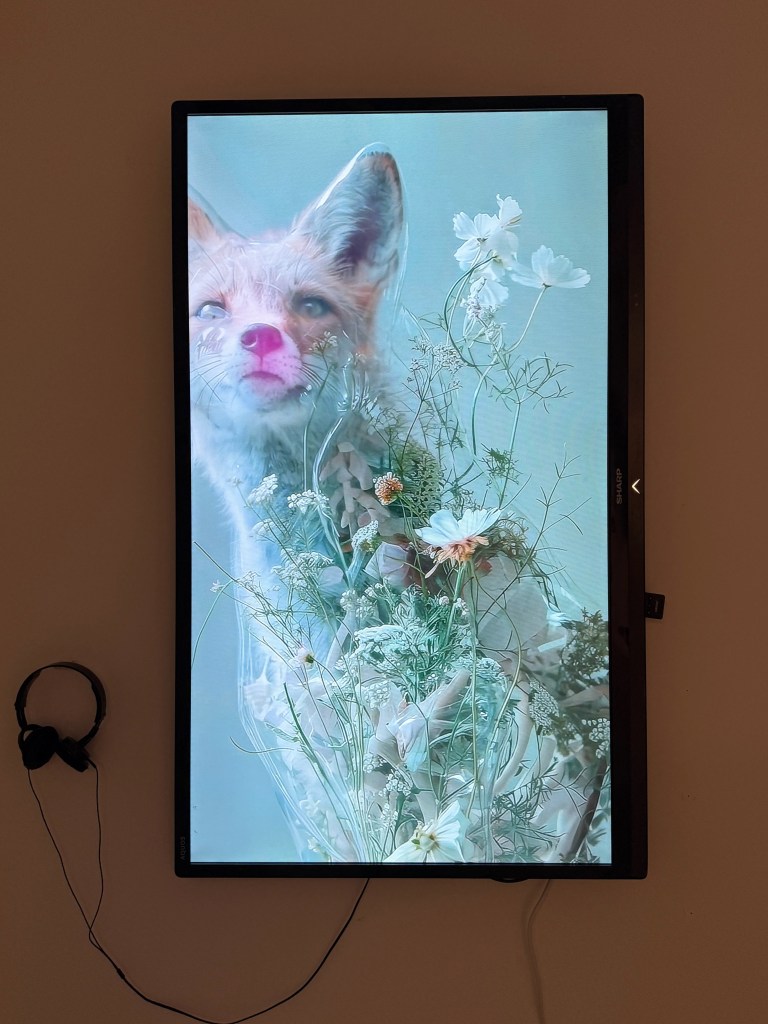
A tuber envisions a post-humanist future in which animals shape their own digital social spheres. It imagines a future facing media ecosystem where the “animal tuber” and the “AI tuber” coexist, their shared presence forming a community designed for non-human agency. Here, animal emotions function as core data inputs and interaction parameters, driving AI generated content and shaping the rhythms of the platform itself. Within this ecosystem, animals are no longer performers but active participants and discerning viewers. A tuber proposes a speculative framework for future animal digital communities, inviting us to rethink interspecies media and coexist.
Digital Media Video, Interactive Sensors
 SEED_2065