What happens when humans stop imagining ourselves as exceptional?
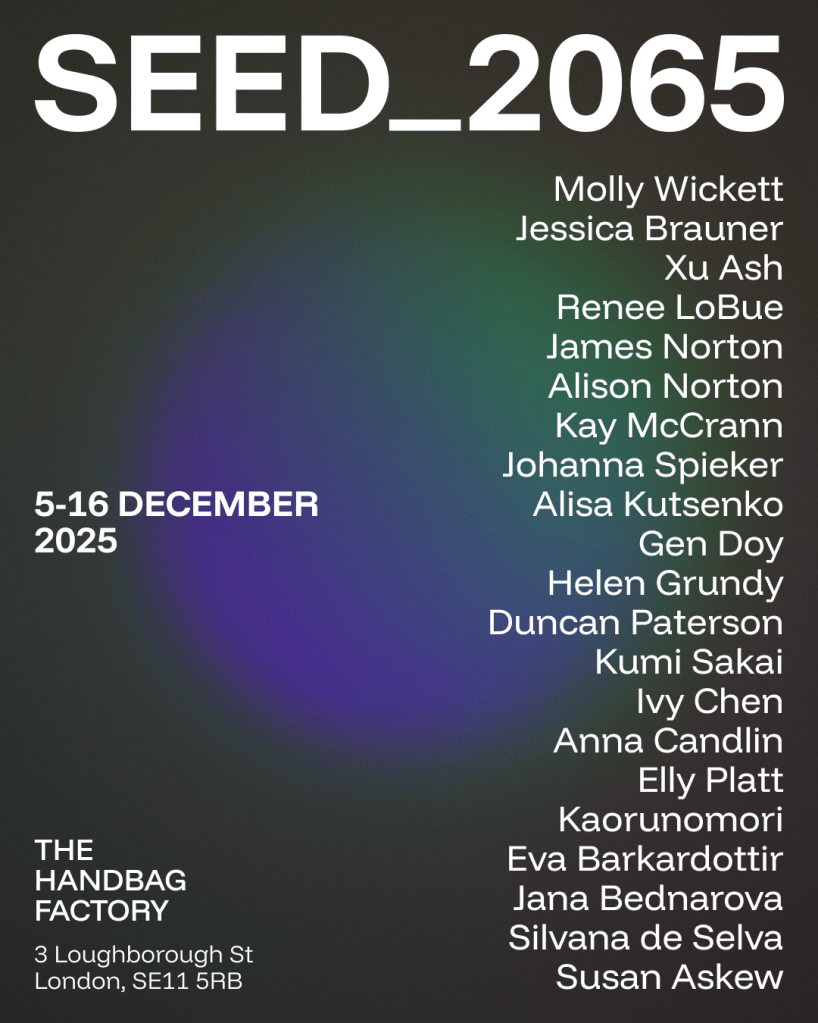
In June 2025, an open call led to 21 UK and International artists joining SEED_2065, to make new artworks for a first SEED show in December, 2025, at the Handbag Factory Gallery, Vauxhall. This art project focused on ecological flourishing and hope for the future: the artists imagined futures rooted in harmony between the human and the more-than-human world, while looking back from this future perspective at our dystopian present. This work was based in the belief that hope is a catalyst for positive change.
Artists included both emerging and established practitioners working across installation, sculpture, moving image, sound and performance. These artists created works for a December 2025 exhibition at the Handbag Factory Gallery, London.
Artists included both emerging and established practitioners working across installation, drawing, sculpture, moving image, sound and performance. These artists created works for a December 2025 exhibition at the Handbag Factory Gallery, London 4-15 December, 2025.
The 21 artists either documented our current dysfunction or created a hopeful future world. By imagining a utopian future, we believe hope becomes a catalyst for positive change. In the five months leading up to the show, all participants took part in a series of in-depth workshops focused on collaborative thinking, ecological ethics, speculative futures, and planning the show and events. Artists also interviewed one another about how they were approaching the project brief. Quotes from these interviews were added to the research wall and the full interviews can be found on this web site.
Events included:
- A collage making workshop focused on responding to the artworks.
- A workshop focused on stories for change.
- A lumen print workshop
- A zine making workshop
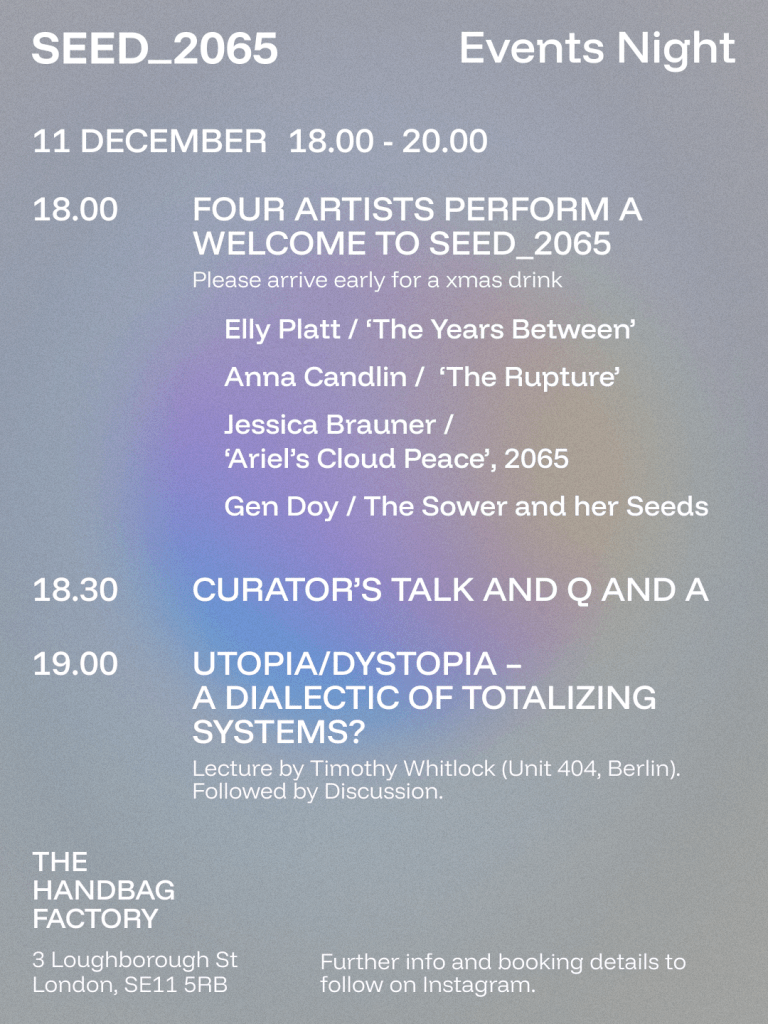
- An events evening with four artists’ performances and a hybrid lecture from Berlin on utopian and dystopian themes in art.
A key feature of these was the opportunity for workshop participants to have their creative outcomes (such as collages and drawings/stories) displayed in the exhibition (this was optional).
This first phase of the project aimed to:
- Provide opportunities for artists to meet regularly to collaboratively imagine alternative hopeful narratives and discuss how we can positively impact the dystopian present through art.
- Provide opportunities for artists to showcase original, inspiring artworks that encourage public engagement with healing the human-nonhuman environment in a post-anthropocentric future.
- Build new networks and partnerships between artists, visitors, and organisations, extending beyond the first show.
 SEED_2065